Harvest Planning: The Definitive Guide to Ripeness, Logistics, and Quality Protocols
Harvest Planning: The Definitive Guide to Ripeness, Logistics, and Quality Protocols
Executive Summary
This comprehensive guide offers an end-to-end framework for vineyard managers, viticulturists, and winemakers navigating the critical period of harvest. It addresses the complex interplay of factors required to achieve optimal grape quality, operational efficiency, and seamless winery integration. The problem it solves is the inherent uncertainty and logistical challenge of harvest, providing actionable strategies to minimize risks and maximize the potential of each vintage.
Readers will gain an authoritative understanding of:
- Precise grape ripeness assessment, combining analytical data with sensory evaluation.
- Strategic block prioritization and effective communication channels with wineries.
- Optimized crew scheduling, equipment readiness, and essential hygiene protocols.
- Regional considerations and troubleshooting common harvest challenges.
- Critical post-harvest practices for vineyard health and continuous improvement.
By implementing the detailed protocols and best practices outlined herein, vineyard operations can transition from reactive responses to proactive, data-driven decisions, ensuring a successful and high-quality harvest. Estimated reading time: 25 minutes.
Table of Contents
- Executive Summary
- The Science of Ripeness: Brix, pH, TA, and Beyond
- Sensory Evaluation and Seed Maturity: The Unsung Heroes
- Strategic Harvest Logistics and Block Prioritization
- Winery Communication, Crew Management, and Equipment Readiness
- Post-Harvest Care and Data Collection: Setting the Stage for Next Season
- Tools & Resources
- Key Takeaways
The Science of Ripeness: Brix, pH, TA, and Beyond
How to accurately assess grape ripeness for optimal harvest timing?
Accurate ripeness assessment is the cornerstone of quality wine production, moving beyond simple sugar accumulation to encompass a complex interplay of chemical parameters. Vineyard managers must monitor Brix, pH, and Titratable Acidity (TA) diligently to make informed harvest decisions.
Brix (Sugar Content): Brix measures the soluble solids, primarily sugars, in grape juice. It is typically monitored using a refractometer. Sampling should commence approximately 2-3 weeks before anticipated harvest, taken every 2-3 days, or daily as harvest approaches. A representative sample involves collecting 100-200 berries from various clusters and vine positions (sunny, shaded, top, bottom) across a block. Crush berries gently and measure the juice. Industry standards suggest target Brix levels vary significantly by varietal and desired wine style. For example, Chardonnay destined for sparkling wine might be harvested at 18-20 Brix, while for a still, full-bodied Chardonnay, 22-24 Brix is common. Cabernet Sauvignon often targets 23-25 Brix for balanced ripeness.
pH (Acidity/Alkalinity): pH measures the active acidity of the grape juice. It is crucial for wine stability, microbial control, and mouthfeel. Values typically range from 3.0 to 4.0. Lower pH indicates higher acidity. For white wines, a pH of 3.1-3.4 is often desired, while red wines typically fall into the 3.4-3.8 range. Elevated pH can lead to microbial spoilage and color instability in red wines. pH is measured using a calibrated pH meter on the same juice sample used for Brix.
TA (Titratable Acidity): TA measures the total concentration of acids, primarily tartaric and malic acid, in the grape juice. It is expressed as grams per liter (g/L) of tartaric acid equivalent. TA contributes significantly to the freshness and balance of a wine. White wines often target 6-9 g/L TA, while red wines aim for 5-8 g/L. TA is determined by titration with a standardized base solution. As grapes ripen, malic acid often degrades through respiration, leading to a decrease in TA. In warmer regions, this drop can be rapid, sometimes resulting in grapes with high Brix but low TA and high pH, posing a challenge for winemakers.
Step-by-Step Ripeness Sampling Protocol:
- Identify Representative Blocks: Select specific sampling zones within each block that represent the block's overall variability (e.g. high vigor vs. low vigor, different soil types, sun exposure).
- Collect Berries: For each sample, collect 100-200 berries. Randomly select berries from different clusters (top, middle, bottom) and different positions on the vine (exposed, shaded). Avoid only picking the ripest or least ripe. Place berries in a sealed bag.
- Process Sample: Gently crush berries by hand or with a mortar and pestle to extract juice. Avoid crushing seeds or skins excessively as this can introduce tannins or off-flavors that interfere with pH readings.
- Measure Brix: Place a few drops of juice on a calibrated refractometer. Record the reading.
- Measure pH and TA: Filter a portion of the juice to remove solids. Use a calibrated pH meter for pH. Perform a titration for TA.
- Record Data: Log all data points (Brix, pH, TA, date, block, sampler) using a vineyard management system like Vinobloc.
Regional Considerations: In cooler climates (e.g. Oregon, parts of Germany), grapes often retain higher acidity, requiring careful monitoring to ensure physiological ripeness (flavor and tannin development) catches up to sugar levels. In warmer regions (e.g. California's Central Valley, Australia), acidity can drop rapidly, leading to high Brix but potentially unbalanced wines. Vineyard managers in these areas might consider earlier morning harvests to preserve acidity and cooler fruit temperatures.
Common Mistakes:
- Inconsistent Sampling: Sampling from only the most accessible or ripest clusters leads to unrepresentative data. Ensure random, widespread sampling.
- Relying Solely on Brix: Over-reliance on sugar alone can result in wines lacking balance or exhibiting 'green' flavors despite high Brix. pH and TA are equally critical.
- Delayed Sampling: Waiting too long to start monitoring can lead to missing the optimal harvest window, especially in fast-ripening varieties or during heat spikes.
Varietal Ripeness Targets:
| Varietal | Target Brix | Target pH | Target TA (g/L) |
|---|---|---|---|
| Chardonnay (Still) | 22.0 - 24.0 | 3.2 - 3.5 | 6.0 - 8.0 |
| Chardonnay (Sparkling) | 18.0 - 20.0 | 3.0 - 3.2 | 9.0 - 11.0 |
| Sauvignon Blanc | 20.0 - 22.0 | 3.1 - 3.3 | 7.0 - 9.0 |
| Pinot Noir | 22.5 - 24.5 | 3.4 - 3.7 | 5.5 - 7.5 |
| Cabernet Sauvignon | 23.0 - 25.0 | 3.5 - 3.8 | 5.0 - 7.0 |
Note: These are general guidelines and may vary based on specific winemaking goals and regional terroir.
Sensory Evaluation and Seed Maturity: The Unsung Heroes
Why are flavor and seed maturity critical for wine quality?
While analytical data provides quantitative metrics, sensory evaluation and seed maturity assessment offer qualitative insights into physiological ripeness, which are paramount for producing balanced, complex wines. These factors often dictate the true 'readiness' of grapes, especially for red varietals.
Flavor Development: Grape flavors evolve significantly throughout ripening. Early in development, grapes exhibit herbaceous or green notes (e.g. pyrazines in Cabernet Sauvignon). As ripening progresses, these evolve into fruitier characteristics (e.g. blackcurrant in Cabernet, apple/pear in Chardonnay) and eventually into more jammy or dried fruit notes if over-ripe. Sensory evaluation involves tasting berries from representative samples, focusing on skin and pulp flavors. Winemakers and viticulturists should look for the disappearance of green, vegetal notes and the emergence of desired varietal fruit characters. The intensity and persistence of these flavors are key indicators. For white wines, the goal is often bright, fresh fruit and citrus notes. For reds, it's typically ripe red or black fruit, often with hints of spice or earth, and the absence of unripe characteristics.
Seed Maturity: Seed maturity is a crucial indicator, particularly for red grape varietals, as seeds contain tannins that contribute to wine structure, mouthfeel, and ageability. Unripe seeds are typically green, soft, and taste astringent and bitter. As seeds mature, they lignify, turning brown and becoming harder and crunchier. The bitterness should diminish, evolving into a nutty or savory taste. This process often lags behind sugar accumulation, meaning high Brix grapes can still have immature seeds, leading to harsh, green tannins in the resulting wine. To assess seed maturity, gently bite into a few seeds from a representative sample. Note the color, texture, and taste. A fully ripe seed will be dark brown, hard, and have a non-bitter, slightly nutty flavor.
Step-by-Step Sensory Assessment Protocol:
- Collect Samples: In conjunction with analytical sampling, collect 20-30 berries from various parts of the block and different vine positions.
- Visual Assessment: Observe skin color (deepening in reds, golden in whites), turgidity (berries should be firm, not shriveled), and attachment to the pedicel (should detach easily when ripe).
- Skin Assessment: Chew a few berry skins. Assess texture (should be pliable, not tough), bitterness, and tannin development (should be soft, not astringent).
- Pulp Assessment: Taste the pulp for primary fruit flavors, sweetness, and acidity balance. Note the intensity and specific flavor descriptors.
- Seed Assessment: Separate a few seeds. Visually inspect color (green → light brown → dark brown). Bite them to assess hardness (soft → crunchy) and taste (bitter → nutty/savory).
- Record Observations: Document detailed notes on flavor profiles, skin texture, and seed maturity in a vineyard management system like Vinobloc.
Regional Considerations: Canopy management significantly impacts flavor and seed maturity. In cooler regions, leaf pulling might be necessary to ensure adequate sunlight exposure, promoting ripeness. In warmer regions, maintaining some shade can protect sensitive flavors from sunburn and prevent rapid acidity loss, allowing physiological ripeness to catch up to sugar levels. Water stress management also plays a critical role; moderate stress can enhance flavor concentration, while severe stress can lead to arrested ripening and unwanted shriveling.
Common Mistakes:
- Overlooking Non-Sugar Ripeness: Focusing solely on Brix and neglecting flavor and tannin development can lead to wines that are sweet but unbalanced or tannically harsh.
- Inconsistent Tasting: Failing to taste regularly or using unrepresentative samples can lead to misjudgments of ripeness.
- Ignoring Seed Bitterness: Harvesting red grapes with green, bitter seeds will inevitably result in wines with undesirable astringency.
Flavor Descriptor Evolution (Example - Cabernet Sauvignon):
| Ripeness Stage | Skin Flavors | Pulp Flavors | Seed Characteristics |
|---|---|---|---|
| Under-ripe | Green bell pepper, herbaceous, vegetal | Sour, tart, unripe berry | Green, soft, very bitter/astringent |
| Optimal Ripeness | Blackcurrant, cassis, cedar, subtle spice | Ripe red/black fruit, balanced sweetness/acidity | Dark brown, hard, nutty, minimal bitterness |
| Over-ripe | Raisin, prune, cooked fruit, jammy | Sweet, jammy, low acidity, baked fruit | Dark brown, brittle, sometimes rancid/stale |
Strategic Harvest Logistics and Block Prioritization
How to plan and execute efficient vineyard harvest logistics?
Effective harvest logistics are crucial for translating optimal ripeness into high-quality wine. This involves meticulous planning, strategic block prioritization, and seamless coordination between vineyard and winery operations. Disorganized logistics can compromise fruit quality, regardless of how perfectly ripe the grapes are.
Block Prioritization: Not all blocks ripen simultaneously, nor do they hold equal importance for the final wine program. Prioritization should be a dynamic process, considering several factors:
- Ripeness Data: Blocks nearing optimal Brix, pH, TA, and sensory ripeness take precedence.
- Varietal Urgency: Early-ripening varietals (e.g. Pinot Noir, Chardonnay) or those susceptible to botrytis (thin-skinned) often require earlier attention.
- Winemaking Style: Blocks designated for specific wine styles (e.g. sparkling base, rosé, high-end reserve) might have tighter harvest windows or specific quality requirements.
- Weather Forecast: Anticipated heatwaves, heavy rains, or frost can accelerate or halt ripening, necessitating immediate action for vulnerable blocks.
- Winery Capacity: The winery's tank space, press capacity, and labor availability dictate how much fruit can be processed at once.
- Vineyard Logistics: Proximity to the winery, accessibility, and potential for machine harvesting versus hand-picking.
A block prioritization matrix, updated daily or every few days, helps visualize and manage these competing priorities. This matrix should include estimated yield, target Brix, current Brix, projected harvest date, and any specific notes (e.g. 'high priority for sparkling').
Step-by-Step Harvest Scheduling and Prioritization:
- Initial Assessment (4-6 weeks pre-harvest): Review historical ripening data for each block. Conduct initial yield estimates.
- Weekly Review (3-4 weeks pre-harvest): Begin regular Brix/pH/TA sampling. Update ripeness projections. Discuss initial harvest windows with the winery.
- Daily Review (1-2 weeks pre-harvest): Intensify sampling. Monitor weather forecasts closely. Create a rolling 7-day harvest schedule, prioritizing blocks based on ripeness, urgency, and winery capacity.
- Final Confirmation (24-48 hours pre-harvest): Confirm the specific blocks, tonnage, and time with the winery and harvest crew. Communicate any last-minute changes immediately.
- Execute and Monitor: Oversee picking, transport, and delivery. Continuously monitor remaining blocks and adjust the schedule as needed based on new data and conditions.
Regional Considerations: In regions prone to extreme weather events (e.g. hail in Bordeaux, hurricanes in parts of the East Coast US, wildfires in California), contingency plans are vital. This might include having access to custom crush facilities, extra harvest crews on standby, or specialized equipment for rapid harvesting. For operations in areas with significant diurnal shifts, nighttime or very early morning harvesting is a common practice to ensure fruit arrives at the winery cool, preserving aromatics and preventing premature oxidation. This also reduces stress on harvest crews during hot days.
Common Mistakes:
- Poor Communication with Winery: Last-minute changes or a lack of clear communication can overwhelm winery staff and compromise fruit processing.
- Ignoring Weather Forecasts: Failing to adjust schedules based on imminent weather events can lead to damaged or over-ripe fruit.
- Over-committing Tonnage: Scheduling more fruit than the winery can realistically process in a given timeframe results in delays and potential quality degradation.
Harvest Block Prioritization Matrix:
| Block ID | Varietal | Target Wine Style | Current Brix | Current pH | Projected Harvest Date | Urgency Rating (1-5) | Notes |
|---|---|---|---|---|---|---|---|
| B101 | Chardonnay | Sparkling Base | 19.5 | 3.15 | Sep 5th | 5 (High) | Early pick for acidity. |
| B203 | Pinot Noir | Reserve Red | 23.0 | 3.60 | Sep 12th | 4 | Monitor seed maturity daily. |
| B305 | Sauvignon Blanc | Estate White | 21.0 | 3.20 | Sep 8th | 4 | Heatwave predicted, consider morning pick. |
| B402 | Cabernet Sauvignon | Estate Red | 22.5 | 3.55 | Sep 25th | 3 | Still need tannin development. |
Winery Communication, Crew Management, and Equipment Readiness
What are the essential protocols for winery communication, crew and equipment management during harvest?
The success of harvest hinges on robust communication, efficient crew management, and impeccably maintained equipment. These operational pillars ensure smooth execution, protect fruit quality, and safeguard personnel.
Winery Communication: Consistent and clear communication with the winery is non-negotiable. This involves daily or bi-daily updates on ripeness data, projected tonnage, and confirmed harvest schedules. Key information to relay includes:
- Confirmed Pick Dates & Times: Specific blocks and their scheduled harvest window.
- Estimated Tonnage: Accurate estimates allow the winery to prepare tank space, processing equipment, and staff.
- Varietal & Block ID: Clear labeling for traceability.
- Picking Method: Hand-picked vs. machine-harvested, as this impacts delivery speed and processing needs.
- Special Instructions: Any specific requests from the winemaker (e.g. whole cluster, specific bin size, delivery temperature).
Establish a primary contact person at both the vineyard and winery for all harvest-related communications. Utilize shared digital platforms or vineyard management software like Vinobloc to centralize information, reducing miscommunication.
Crew Management: A well-managed harvest crew is efficient and safe. Prior to harvest, conduct thorough training sessions covering:
- Picking Techniques: How to select ripe clusters, avoid unripe or damaged fruit, and handle clusters gently to prevent bruising.
- Safety Protocols: Proper use of tools, hydration, heat stress prevention, emergency procedures, and first aid.
- Bin Handling: Gentle loading, avoiding overfilling, and maintaining cleanliness.
- Quality Standards: Emphasize the importance of clean fruit, free of leaves and MOG (Material Other than Grapes).
Assign clear roles and supervisors for each picking crew. Monitor pick rates and quality throughout the day, providing constructive feedback. Ensure adequate breaks, water, and shade are available, especially during hot conditions.
Equipment Readiness and Bin Hygiene: All equipment must be inspected, serviced, and sanitized well in advance of harvest. This includes:
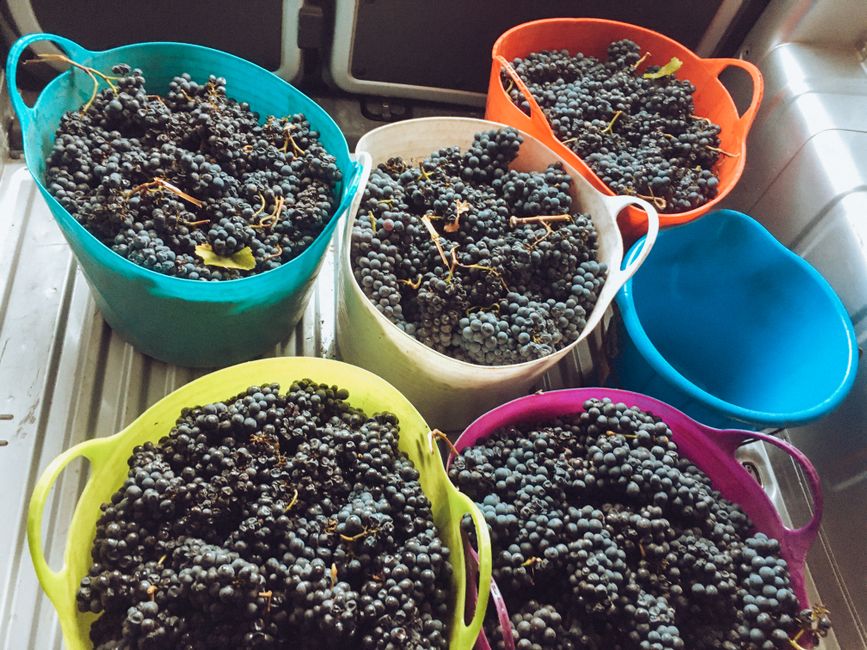
- Harvest Bins/Totes: Inspect for damage, thoroughly clean, and sanitize to prevent microbial contamination. Ensure adequate supply for anticipated tonnage. For hand-harvested fruit, small bins (e.g. 0.5-ton MacroBins) are preferred to minimize fruit compaction.
- Tractors & Trailers: Full mechanical inspection, tire pressure, fluid levels, and brake checks. Ensure trailers are equipped for safe transport of bins.
- Harvesters (if applicable): Pre-season service, calibration, and test runs. Check picking rods, belts, and cleaning fans.
- Refractometers, pH meters, TA kits: Calibrate regularly and ensure all reagents are fresh.
- Communication Devices: Radios, cell phones, and chargers for vineyard and transport teams.
Bin hygiene is paramount. Dirty bins can introduce unwanted yeasts, bacteria, or mold, compromising fruit quality and potentially leading to off-flavors in the wine. Implement a strict wash-and-sanitize protocol for all bins immediately after emptying and before reuse. A 0.1-0.5% solution of peracetic acid or a chlorine-based sanitizer can be effective, followed by a thorough rinse.
Regional Considerations: Labor availability can vary significantly by region. Some areas rely heavily on seasonal migrant workers, requiring careful planning for housing and legal compliance. In regions with strict transport regulations, ensuring all vehicles are roadworthy and drivers are licensed is critical. For vineyards sharing equipment or custom crush facilities, scheduling becomes even more complex, necessitating early bookings and detailed coordination.
Common Mistakes:
- Neglecting Safety Briefings: Leads to preventable accidents and injuries.
- Uncleaned Bins: A primary source of microbial contamination, leading to spoilage.
- Last-Minute Equipment Checks: Discovering equipment failures on harvest day causes costly delays and stress.
- Ambiguous Communication: Vague instructions or assumptions can lead to incorrect picks or missed delivery windows.
Essential Harvest Equipment Checklist:
| Category | Item | Pre-Harvest Check | Daily Check |
|---|---|---|---|
| Sampling & Lab | Refractometer | Calibrate, Clean | Calibrate |
| pH Meter | Calibrate, New Probes | Calibrate | |
| Titration Kit/Reagents | Stock, Fresh | Verify Stock | |
| Harvest Tools | Picking Knives/Shears | Sharpen, Sanitize | Sanitize |
| Harvest Bins/Totes | Clean, Inspect Damage | Clean, Inspect | |
| Vehicles & Transport | Tractors | Full Service, Fuel | Fluid Levels, Fuel |
| Trailers | Brakes, Tires, Lights | Tire Pressure, Secure Bins | |
| Forklift | Full Service, Fuel | Fluid Levels, Fuel | |
| Safety & Communication | First Aid Kits | Stocked, Accessible | Verify Stock |
| Radios/Phones | Test, Charge | Charge | |
| Water Coolers | Clean, Functional | Fill with Ice/Water |
Post-Harvest Care and Data Collection: Setting the Stage for Next Season
What post-harvest practices ensure vineyard health and continuous improvement?
The period immediately following harvest is not a time for rest, but rather a critical window for vineyard recovery, preparation for dormancy, and comprehensive data analysis. Neglecting post-harvest care can significantly impact vine health, bud fertility, and overall yield in subsequent vintages.
Vineyard Recovery and Nutrient Management: After the intense physiological demands of ripening and harvest, vines are depleted of energy reserves. Post-harvest irrigation, if conditions are dry, is essential to rehydrate the vines and allow them to take up nutrients. This is particularly important for establishing adequate carbohydrate reserves in the trunk and roots, which are vital for winter hardiness and spring bud break. Leaf tissue analysis conducted post-harvest can identify nutrient deficiencies that developed during the season, allowing for targeted nutrient applications (e.g. foliar sprays of zinc or boron) before leaf fall. Soil amendments, such as compost or specific mineral supplements, can also be applied at this time to improve soil health and nutrient availability for the following season. The goal is to maximize photosynthesis during the remaining leaf-on period.
Pest and Disease Monitoring: While active disease management might slow down, post-harvest is an ideal time for a thorough vineyard walk-through to assess disease pressure and pest populations. Identify areas with significant powdery mildew, botrytis, or insect damage. This information is crucial for planning dormant sprays and integrated pest management strategies for the next growing season. Removing mummified clusters and infected leaves can reduce inoculum for the following year. For example, removing overwintering spores of powdery mildew can significantly reduce primary infection in the spring.
Equipment Maintenance and Storage: Immediately after harvest, all equipment must be thoroughly cleaned, inspected, and serviced. Harvesters, tractors, sprayers, and picking bins should be washed, sanitized, and stored properly. Address any repairs promptly to avoid rust or further deterioration. Lubricate moving parts, change fluids, and ensure all components are in good working order for the next season. This proactive maintenance extends equipment lifespan and prevents costly breakdowns during peak periods.
Data Collection and Analysis: The harvest data collected through Vinobloc – including Brix, pH, TA, yield per block, labor hours, and any specific observations (e.g. disease incidence, cluster quality) – is invaluable. This data should be compiled and analyzed to identify trends, evaluate block performance, and inform future vineyard management decisions. For instance, comparing block yields against historical averages can reveal issues with pruning, nutrition, or water management. Analyzing ripeness curves can refine future harvest timing predictions. This feedback loop is essential for continuous improvement.
Step-by-Step Post-Harvest Protocol:
- Immediate Post-Harvest: Rehydrate vines with irrigation if necessary. Clean and sanitize all harvest equipment (bins, trailers, picking tools).
- Vineyard Assessment (1-2 weeks post-harvest): Conduct a comprehensive vineyard inspection for pest and disease pressure. Take leaf tissue samples for nutrient analysis.
- Nutrient Application: Based on leaf analysis, apply targeted foliar or soil nutrients to replenish vine reserves.
- Cover Cropping (Optional): Sow cover crops to improve soil health, prevent erosion, and add organic matter.
- Equipment Maintenance: Perform full service and repair on all machinery. Store equipment properly.
- Data Review & Planning: Compile and analyze all harvest data. Conduct post-mortem meetings with vineyard and winery teams to discuss successes, challenges, and improvements for the next vintage.
Regional Considerations: In regions with harsh winters, post-harvest care also involves specific winterization strategies, such as hilling up soil around graft unions for frost protection or applying protective sprays. In areas prone to late-season rains, aggressive leaf removal post-harvest might be avoided to allow for maximum carbohydrate accumulation before dormancy. Conversely, in very dry regions, consistent post-harvest irrigation is critical to prevent vine stress and ensure robust bud development.
Common Mistakes:
- Neglecting Post-Harvest Irrigation: Leads to vine stress and reduced carbohydrate reserves, impacting next year's crop.
- Skipping Equipment Maintenance: Results in breakdowns, reduced lifespan, and increased operational costs.
- Ignoring Data Analysis: Missed opportunities for identifying areas of improvement and optimizing vineyard practices.
- Failing to Address Pest/Disease Hotspots: Allows pathogens and pests to overwinter and re-emerge stronger next season.
Post-Harvest Data Points to Track:
| Category | Key Data Points | Purpose |
|---|---|---|
| Yield & Quality | Tons/Acre per Block | Assess productivity, identify under/over-performing blocks. |
| Average Brix, pH, TA at Harvest | Evaluate ripeness achievement against targets. | |
| Quality Notes (MOG, disease, uniformity) | Identify vineyard issues affecting fruit quality. | |
| Operational | Labor Hours per Block | Assess efficiency, inform future labor planning. |
| Equipment Downtime/Repairs | Identify maintenance needs, evaluate reliability. | |
| Transport Logistics (times, issues) | Optimize delivery schedules and routes. | |
| Vine Health | Post-Harvest Nutrient Levels | Inform next season's fertilization program. |
| Pest/Disease Incidence | Plan dormant sprays and IPM strategies. |
Tools & Resources
Effective harvest planning is significantly enhanced by utilizing the right tools and leveraging modern technology.
Essential Equipment:
- Refractometer (Digital or Optical): Used for rapid, on-site measurement of Brix (sugar content). Digital models offer higher precision and ease of reading.
- pH Meter: Crucial for accurate measurement of juice acidity. Requires regular calibration with buffer solutions.
- Titration Kit: For determining Titratable Acidity (TA). Includes burettes, standardized NaOH solution, and indicator.
- Harvest Bins/Totes: Durable, food-grade plastic bins (e.g. MacroBins) ranging from 0.5 to 1.5 tons. Smaller bins are preferred for hand-picked, premium fruit to minimize crushing.
- Picking Shears/Knives: High-quality, ergonomic tools for efficient and clean cluster removal.
- Grape Harvester (Mechanical): For large-scale operations, mechanical harvesters offer speed and efficiency, especially for juice grapes or certain wine styles. Requires specialized maintenance.
- Forklift/Tractor with Loader: Essential for moving and loading full harvest bins.
- Two-Way Radios/Communication Devices: For seamless communication between vineyard staff, crew supervisors, and transport teams.
Vineyard Management Software:
Vinobloc: A comprehensive vineyard management platform designed to streamline operations from vine to bottle. Vinobloc allows vineyard managers to:
- Track and log all ripeness data (Brix, pH, TA, sensory notes) by block and sampling date.
- Manage harvest crew schedules, assignments, and labor hours.
- Generate yield estimates and track actual tonnage harvested per block.
- Facilitate real-time communication and data sharing with winery teams.
- Maintain equipment maintenance logs and schedules.
- Compile historical data for trend analysis and continuous improvement.
Helpful Templates & Checklists:
- Pre-Harvest Equipment Readiness Checklist: A detailed list ensuring all machinery and tools are inspected and serviced.
- Harvest Crew Safety Briefing Template: Outlines critical safety procedures, emergency contacts, and hydration protocols.
- Daily Harvest Schedule Template: Helps track blocks to be picked, estimated tonnage, assigned crews, and delivery times.
- Winery Communication Log: A record of all confirmed harvest details and special instructions shared with the winery.
- Post-Harvest Vineyard Assessment Form: Guides systematic inspection for vine health, disease, and pest issues.
Key Takeaways
- Integrate Data & Sensory: Combine precise Brix, pH, and TA measurements with thorough flavor and seed maturity assessments for truly optimal harvest timing.
- Prioritize Strategically: Develop a dynamic block prioritization matrix, considering ripeness, varietal urgency, winemaking goals, and weather forecasts.
- Communicate Continuously: Maintain open, detailed, and real-time communication with the winery and harvest crews to ensure seamless logistics and prevent errors.
- Prepare Proactively: Conduct meticulous pre-harvest checks for all equipment and implement rigorous bin hygiene protocols to safeguard fruit quality.
- Invest in Your Crew: Provide comprehensive safety training, clear instructions, and adequate support for harvest teams to maximize efficiency and well-being.
- Don't Neglect Post-Harvest: Prioritize vineyard recovery, equipment maintenance, and thorough data analysis to build resilience and improve future vintages.
- Leverage Technology: Utilize vineyard management software like Vinobloc to centralize data, streamline communication, and make data-driven decisions.
VinoBloc Team
Vineyard Management Experts
Ready to Transform Your Vineyard Management?
See how VinoBloc can help you streamline block-level data and harvest decisions.