Mastering Grapevine Leaf Yellowing: Advanced Diagnostics and Solutions for Vineyard Managers
Introduction: The Pervasive Threat of Grapevine Leaf Yellowing
Grapevine leaf yellowing presents a persistent and often perplexing challenge for vineyard managers. Beyond the aesthetic concern, widespread chlorosis signals underlying physiological distress that can severely compromise vine health, fruit quality, and ultimately, yield. Unaddressed, this discoloration can lead to reduced photosynthetic efficiency, impaired sugar accumulation, delayed ripening, and increased susceptibility to disease and environmental stressors. The cumulative impact on a vineyard's productivity and profitability can be substantial, manifesting as diminished fruit marketability and long-term decline in vine vigor and longevity. For experienced managers, recognizing the nuances of yellowing patterns and implementing precise, timely interventions is paramount to safeguarding the economic viability of their operations.
Pinpointing the Problem: Diagnostic Protocols for Yellowing Leaves
Effective management of leaf yellowing begins with accurate diagnosis. Visual assessment provides initial clues, but must be corroborated with scientific data to avoid misdiagnosis and ineffective treatments. A systematic approach involves combining visual symptoms with comprehensive soil and tissue analyses.
1. Initial Visual Assessment
Observe the pattern of yellowing:
- Location: Are older leaves, younger leaves, or both affected? Is it localized to specific shoots or widespread across the vine/block?
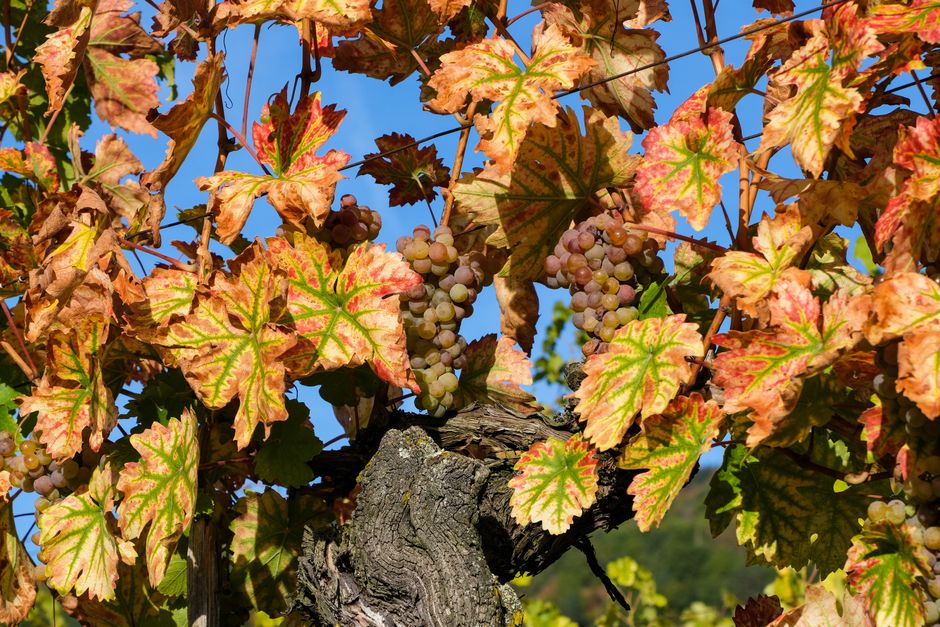
- Pattern: Is the yellowing interveinal (between veins), marginal (leaf edges), or uniform? Are veins remaining green?
- Severity: Is it a pale yellow, bright yellow, or progressing to necrosis (browning)?
- Timing: When did the symptoms first appear (early season, mid-season, post-véraison)?
2. Soil and Tissue Analysis
These are critical for definitive diagnosis. Collect samples from both symptomatic and healthy vines for comparison.
- Soil Analysis: Conduct annually or biennially. Pay close attention to pH, organic matter content, cation exchange capacity (CEC), and macro/micronutrient levels.
- Petiole Analysis: Collect petioles at specific phenological stages (e.g. bloom, véraison). This provides a snapshot of nutrient uptake and translocation.
- Leaf Blade Analysis: Offers insights into nutrient concentrations within the leaf tissue itself, complementing petiole analysis.
- Sap Analysis: A rapid method for assessing nutrient mobility and availability in real-time, often used to fine-tune foliar feeding programs.
| Nutrient | Sufficiency Range (Dry Weight) | Deficiency Threshold (Approx.) |
|---|---|---|
| Nitrogen (N) | 1.0 - 2.0% | < 0.9% |
| Potassium (K) | 1.5 - 2.5% | < 1.2% |
| Magnesium (Mg) | 0.3 - 0.5% | < 0.25% |
| Iron (Fe) | 50 - 200 ppm | < 40 ppm |
| Zinc (Zn) | 25 - 60 ppm | < 20 ppm |
Note: These ranges are general estimates and can vary based on cultivar, rootstock, and specific lab interpretations. Always consult with your local extension service or agronomist for regional specifics.
Common Causes of Grapevine Leaf Yellowing and Their Solutions
1. Nutrient Deficiencies: A Primary Culprit
Specific nutrient imbalances are frequently the cause of yellowing. The pattern and timing of chlorosis often point to the deficient element.
Potassium (K) Deficiency
- Symptoms: Interveinal yellowing (chlorosis) progressing to necrosis (browning) on older leaves, often starting at the margins. Symptoms typically appear mid-season to post-véraison.
- Threshold: Petiole K levels below 1.2% at bloom.
- Solutions:
- Soil Application: For long-term correction, apply potassium sulfate (K2SO4) or potassium chloride (KCl) at rates of 100-200 lbs/acre, based on soil test recommendations. Incorporate into the root zone during dormant season or early spring. Avoid high rates of KCl on chloride-sensitive rootstocks.
- Foliar Application: For rapid, short-term correction, spray potassium nitrate (KNO3) at 5-10 lbs/acre (e.g. K-Leaf brand) with a e.g. 100 gallons of water per acre for thorough coverage, or a commercial foliar potassium product. Apply post-bloom through véraison, repeating every 10-14 days as needed. Always apply in the evening or early morning to minimize leaf burn.
Magnesium (Mg) Deficiency
- Symptoms: Interveinal yellowing on older leaves, often with green veins remaining prominent. Can progress to reddish-brown necrosis in severe cases. Common post-véraison.
- Threshold: Petiole Mg levels below 0.25% at bloom.
- Solutions:
- Soil Application: Apply magnesium sulfate (Epsom salts) at 50-100 lbs/acre or dolomitic lime if soil pH also needs adjustment. Incorporate into the soil.
- Foliar Application: Apply magnesium sulfate (Epsom salts) at 5-10 lbs/acre (e.g. Nu-Mag) with a e.g. 100 gallons of water per acre for thorough coverage, or a chelated Mg product. Apply every 10-14 days from fruit set through véraison.
Iron (Fe) Deficiency (Chlorosis)
- Symptoms: Striking interveinal yellowing on younger, newly expanded leaves, with veins remaining distinctly green. Severe cases can lead to bleaching and necrosis. Often observed in high pH soils.
- Threshold: Petiole Fe levels below 40 ppm at bloom.
- Solutions:
- Soil pH Adjustment: If soil pH is above 7.0, consider applying elemental sulfur to gradually lower pH. This is a long-term strategy.
- Foliar Application: The most effective immediate treatment. Apply chelated iron (e.g. Fe-EDDHA, Fe-DTPA) at 1-2 lbs/acre in 100-200 gallons of water per acre. Repeat every 7-14 days until symptoms subside. Apply during cooler parts of the day.
- Soil Injection/Drench: For localized issues, inject or drench chelated iron (e.g. Sequestrene 138 Fe) directly into the root zone at recommended rates, typically 0.5-1 oz per vine, diluted in water. This provides a more sustained release than foliar sprays.
Nitrogen (N) Deficiency
- Symptoms: Uniform pale green to yellow coloration across older leaves, leading to reduced vigor and smaller berries. Symptoms appear early to mid-season.
- Threshold: Petiole N levels below 0.9% at bloom.
- Solutions:
- Soil Application: Apply urea (46-0-0) or ammonium sulfate (21-0-0) at 20-40 lbs N/acre in early spring, split into multiple applications before bloom and post-fruit set. Avoid excessive N, which can promote vegetative growth over fruit development.
- Foliar Application: For quick uptake, apply low-biuret urea (e.g. Solu-N) at 3-5 lbs/acre (e.g. 100 gallons of water per acre for thorough coverage), post-bloom.
Zinc (Zn) Deficiency
- Symptoms: Small, mottled, often misshapen leaves with interveinal chlorosis, especially on younger leaves. Short internodes leading to 'rosetting' of leaves. Can cause poor fruit set.
- Threshold: Petiole Zn levels below 20 ppm at bloom.
- Solutions:
- Dormant Application: Apply zinc sulfate (ZnSO4) at 10-20 lbs/acre as a dormant spray before bud break.
- Foliar Application: Apply chelated zinc (e.g. Zn-EDTA) at 0.5-1 lb/acre, or zinc sulfate at 2-3 lbs/acre, post-bloom. Repeat if necessary.
2. Environmental and Cultural Stressors
Beyond nutrient imbalances, various stressors can induce yellowing.
- Water Stress: Both excessive (waterlogging, root asphyxiation) and insufficient water can cause yellowing. Monitor soil moisture with probes or tensiometers. Maintain soil moisture within 50-70% of field capacity during critical growth stages.
- Soil Compaction: Restricts root growth and nutrient uptake. Implement cover cropping, deep ripping (if appropriate), and controlled traffic.
- Root Damage: Caused by phylloxera, nematodes, mechanical injury, or disease. Conduct root inspections and nematode assays.
- pH Imbalance: Soil pH directly impacts nutrient availability.
| pH Range | Impact on Nutrient Availability |
|---|---|
| Below 5.5 (Acidic) | Reduced availability of N, P, K, Ca, Mg, B, Mo. Increased availability (and potential toxicity) of Al, Mn, Fe. |
| 5.5 - 6.5 (Ideal for Grapes) | Optimal availability for most macro and micronutrients. |
| Above 7.0 (Alkaline) | Reduced availability of P, Fe, Mn, Zn, Cu, B. Often leads to iron chlorosis. |
3. Pathogen and Pest Infestations
- Viral Diseases: Grapevine Leafroll-associated Viruses (GLRaV) and Grapevine Fanleaf Virus (GFLV) can cause yellowing, reddening, and leaf distortion, particularly in older leaves. Symptoms typically appear post-véraison. Confirm with lab testing (ELISA or PCR). Management focuses on using certified virus-free plant material and vector control (mealybugs for GLRaV, nematodes for GFLV).
- Fungal Diseases: While less common as a primary cause of uniform yellowing, some diseases like Esca complex can cause sudden localized yellowing and necrosis (tiger stripe pattern).
- Pests: Root-feeding pests like phylloxera can cause general decline and yellowing due to impaired nutrient and water uptake.
Strategic Solutions: A Step-by-Step Action Plan
Step 1: Comprehensive Data Collection and Analysis
- Sample Collection: Collect soil, petiole, and/or sap samples from both symptomatic and healthy vines. Ensure proper sampling protocols for representative results.
- Lab Analysis: Submit samples to a reputable agricultural testing laboratory.
- Data Integration: Correlate lab results with visual symptoms, irrigation records, weather data, and vineyard history. Utilize vineyard management software like VinoBloc to centralize and analyze this data, identifying patterns and trends across blocks and seasons.
Step 2: Targeted Remediation and Application
- Identify Root Cause: Based on integrated data, confirm the specific deficiency or stressor.
- Select Appropriate Product: Choose the correct form of nutrient (e.g. chelated iron for high pH soils, sulfate forms for general deficiencies).
- Determine Application Method: Foliar sprays offer rapid uptake for acute deficiencies, while soil applications provide sustained correction. Drip irrigation can deliver soluble nutrients directly to the root zone.
- Precise Dosing and Timing: Adhere strictly to recommended rates. For foliar applications, ensure thorough coverage and apply during periods of high humidity and lower temperatures (early morning or late evening) to maximize absorption and minimize phytotoxicity. For soil applications, consider timing with irrigation or rainfall for incorporation.
- Safety First: Always wear appropriate Personal Protective Equipment (PPE) including gloves, eye protection, and respirators when handling and applying chemicals. Follow all label instructions and local regulations.
Step 3: Proactive Management and Monitoring
- Regular Scouting: Implement a routine scouting program to identify emerging symptoms early.
- Follow-up Analysis: Conduct follow-up petiole or sap analyses 2-4 weeks post-application to assess the effectiveness of treatments.
- Irrigation Management: Optimize irrigation schedules based on real-time soil moisture data and evapotranspiration rates to prevent water stress.
- Soil Health: Implement practices that improve soil structure and organic matter, such as cover cropping and compost application, to enhance nutrient availability and root health.
- Cultivar/Rootstock Selection: For new plantings, select rootstocks known for tolerance to specific soil conditions (e.g. lime-tolerant rootstocks for high pH soils prone to iron chlorosis).
Key Insight: Integrated management is crucial. A holistic approach that combines precise diagnostics, targeted nutrient applications, optimized cultural practices, and ongoing monitoring offers the most sustainable solution to grapevine leaf yellowing.
Example Scenario (Hypothetical)
A vineyard manager observes widespread interveinal yellowing on younger leaves across a 5-acre block of Cabernet Sauvignon, particularly in areas with visible calcium carbonate deposits. Symptoms appeared rapidly post-fruit set. Initial visual assessment suggests iron deficiency. Soil tests from the affected area indicate a pH of 7.8, while petiole analysis (taken at bloom) showed Fe levels at 35 ppm (below the 40 ppm threshold) and Mn at 28 ppm. The manager decides on a foliar application of Fe-EDDHA chelate at 1.5 lbs/acre, mixed with Mn-EDTA at 0.75 lbs/acre, applied within 48 hours of diagnosis. Two weeks later, a follow-up sap analysis shows improved Fe and Mn levels, and new growth exhibits reduced chlorosis. This rapid, targeted intervention prevented significant loss of photosynthetic capacity during a critical berry development phase.
Common Mistakes and Their Consequences
- Misdiagnosis: Applying the wrong nutrient can exacerbate the problem or create new imbalances, wasting resources and delaying effective treatment.
- Improper Application: Incorrect rates, poor coverage, or application during high temperatures can lead to phytotoxicity (leaf burn) or ineffective uptake.
- Ignoring Underlying Causes: Treating symptoms (e.g. foliar iron for chlorosis) without addressing the root cause (e.g. high soil pH) results in recurrent problems and ongoing costs.
- Lack of Monitoring: Failing to conduct follow-up analyses means treatments may not be optimized, leading to continued vine stress.
Actionable Next Steps for Vineyard Managers
- Review and Update Protocols: Immediately review existing diagnostic and treatment protocols for leaf yellowing. Integrate a systematic approach that combines visual scouting with regular soil, petiole, and sap analysis.
- Data Centralization: Implement or refine the use of vineyard management software like VinoBloc to log all scouting observations, lab results, and treatment applications. This creates a historical record for trend analysis and informed decision-making.
- Supplier Consultation: Engage with your agricultural chemical suppliers and agronomists to discuss specific product formulations (e.g. chelated forms, slow-release options) best suited for your soil types and identified deficiencies.
- Team Training: Conduct refresher training for vineyard staff on identifying early symptoms of nutrient deficiencies and the importance of accurate data collection.
Implementation Timeline: Initiate protocol updates and software integration within the next 2-4 weeks. Schedule team training and supplier consultations within the next month, ahead of the next growing season's critical periods.
Success Metrics: Reduced incidence and severity of leaf yellowing across blocks, improved petiole/sap nutrient levels within sufficiency ranges, enhanced vine vigor, and consistent fruit quality metrics (e.g. Brix, pH, TA) compared to historical data.
Conclusion
Grapevine leaf yellowing is a complex issue demanding a sophisticated, data-driven approach. By meticulously diagnosing the underlying causes—whether nutrient deficiency, environmental stress, or pathogen—and implementing targeted, precise solutions, vineyard managers can restore vine health, protect fruit quality, and ensure the long-term productivity of their vineyards. Proactive monitoring, continuous learning, and leveraging advanced management tools are the hallmarks of successful vineyard stewardship in the face of these challenges.
VinoBloc Team
Vineyard Management Experts
Ready to Transform Your Vineyard Management?
See how VinoBloc can help you streamline block-level data and harvest decisions.