Mastering Grapevine Pruning: A Comprehensive Month-by-Month Calendar for Experienced Vineyard Managers

Important Disclaimer
- The specific bud counts, crop load targets (e.g. tons/acre), and timing recommendations provided are general guidelines. Actual practices must be precisely tailored to specific grape varieties, clones, rootstocks, regional climate, soil conditions, desired wine style, and individual vineyard block performance. Always consult local viticultural experts and historical vineyard data for precise adjustments.
The Critical Challenge of Precision Pruning
For experienced vineyard managers, the seasonal rhythm of pruning is not merely a chore but a foundational strategy impacting yield, quality, and vine longevity. However, inconsistent or poorly timed pruning practices present a significant, recurring problem. Without a precise, data-driven approach, vineyards often face issues such as uneven canopy development, increased susceptibility to diseases like Eutypa dieback or Botrytis, suboptimal fruit set, and ultimately, a reduction in the quality and quantity of marketable fruit. The financial ramifications are substantial, manifesting as diminished harvest yields, higher labor costs for remedial canopy management, and a long-term decline in the overall productive lifespan and value of the vineyard.
This comprehensive guide outlines a month-by-month pruning calendar, offering exact specifications and actionable steps designed for managers seeking to optimize their vineyard's performance.
The Annual Pruning Calendar: Precision and Purpose
Effective pruning is a continuous process, with each season's tasks building upon the last. Adhering to specific timing and techniques ensures vine health, balanced growth, and consistent fruit production.
| Month/Period | Primary Pruning Activities | Key Specifications/Goals |
|---|---|---|
| December - February (Dormant) | Dormant Pruning (Cane or Spur) | Establish structure, balance crop load, disease prevention. |
| March - April (Bud Break) | Initial Shoot Thinning, Suckering | Manage shoot density, remove unproductive growth. |
| May - June (Flowering/Fruit Set) | Shoot Positioning, Cluster Thinning (Pre-bloom/Post-set) | Optimize canopy architecture, adjust crop load for quality. |
| July - August (Veraison) | Lateral Removal, Leaf Pulling, Green Harvest | Enhance fruit exposure, manage vigor, improve uniformity. |
| September - November (Post-Harvest) | Post-Harvest Clean-up, Vigor Assessment | Remove debris, assess vine health for next dormant season. |
December - February: Dormant Pruning (The Foundation)
Dormant pruning is the most critical pruning event, shaping the vine for the upcoming season's growth and crop. It typically occurs after leaf fall and before bud swell, when the vines are fully dormant and sap flow is minimal, reducing the risk of disease transmission.
Step-by-Step Dormant Pruning Process:
- Assess Vine Vigor and Health: Before cutting, evaluate each vine's vigor from the previous season. Strong vines can support more buds; weaker vines require fewer. Note any signs of disease or damage.
- Remove Dead, Diseased, or Damaged Wood: Prioritize the removal of any wood exhibiting symptoms of trunk diseases (e.g. Eutypa dieback), frost damage, or mechanical injury. Make clean cuts into healthy wood, ideally at least 6 inches below visible symptoms. Sterilize tools with a 10% bleach solution or 70% alcohol between infected vines.
- Select Canes or Spurs:
- Cane Pruning (e.g. VSP systems): Select 1-2 strong, healthy canes per vine, originating from the head or close to the cordon, ideally 3/8 to 1/2 inch in diameter (pencil thickness). These canes should be 8-12 nodes long, depending on vigor and desired crop load. Leave 1-2 renewal spurs with 2 buds each, positioned to provide new canes for the following year.
- Spur Pruning (e.g. Cordon systems): Select 2-bud spurs from healthy, well-positioned canes along the cordon. Aim for 4-6 spurs per foot of cordon, ensuring even distribution. Remove any weak, excessively vigorous, or downward-growing shoots.
- Make Precise Cuts: All cuts should be clean and smooth to facilitate healing and minimize disease entry points. For canes, cut approximately 1/2 inch beyond the last selected bud. For spurs, cut 1/2 inch above the second bud. Avoid leaving stubs.
- Balance Crop Load: The total number of buds left per vine directly influences potential crop load. For premium wine grapes, target ranges might be 15-25 buds per vine for lower vigor varieties (e.g. Pinot Noir) and 30-45 buds for more vigorous varieties (e.g. Cabernet Sauvignon), adjusted based on specific site productivity and desired yield (e.g. 3-8 tons/acre).
Common Mistake: Leaving too many buds on a weak vine leads to overcropping, resulting in poor fruit quality, delayed ripening, and vine stress. Conversely, leaving too few buds on a vigorous vine can lead to excessive vegetative growth (shading) and reduced yield.
Equipment & Safety:
Utilize high-quality bypass pruners (e.g. Felco F2, Bahco P160-SL-75) for precise cuts. Loppers (e.g. Bahco P160-SL-90, Felco 210A-60) are essential for larger cuts. For extensive operations, electronic pruners (e.g. Pellenc, F3020) significantly increase efficiency. Always wear appropriate personal protective equipment, including sturdy gloves and eye protection. Ensure tools are sharp and regularly sanitized to prevent disease spread.
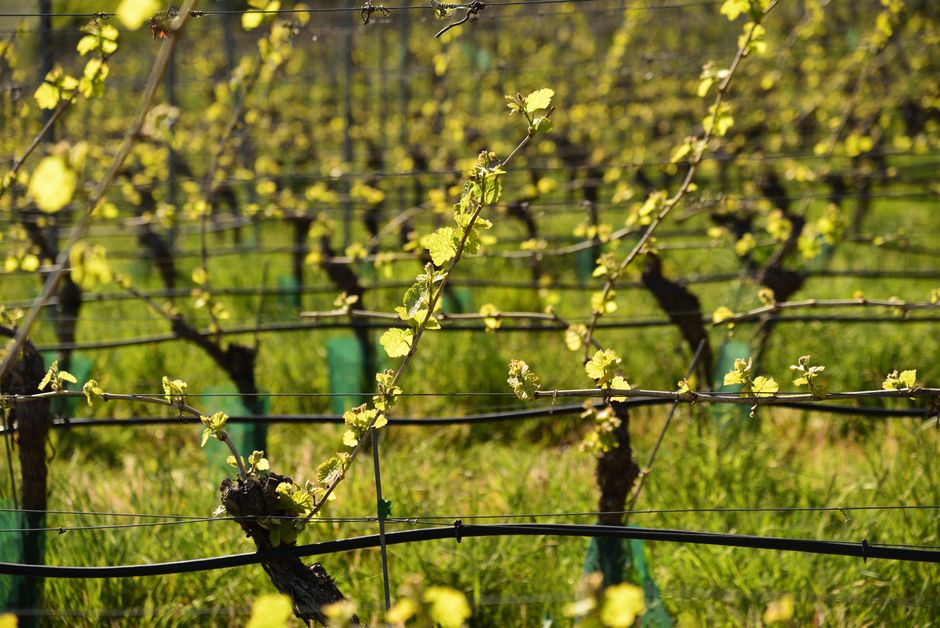
March - April: Bud Break to Early Shoot Growth (Initial Vigor Management)
As buds swell and break, initial shoot thinning and suckering become critical to establish optimal shoot density and remove unproductive growth.
Key Activities:
- Suckering: Remove all shoots growing from the trunk below the cordon. These are vegetative and compete for resources without contributing to fruit production. Perform this when shoots are young and easily snapped by hand, typically 4-8 inches long.
- Initial Shoot Thinning: Once shoots are 6-12 inches long, thin them to 1-2 per node, depending on desired density and vigor. For VSP systems, aim for an average of 4-6 shoots per foot of cordon. Remove any sterile shoots, doubles, or those poorly positioned.
May - June: Flowering to Fruit Set (Canopy & Crop Load Refinement)
This period focuses on managing the developing canopy for optimal light penetration and airflow, and making final adjustments to crop load.
Key Activities:
- Shoot Positioning: For VSP systems, begin lifting and positioning shoots vertically within the catch wires once they reach 10-15 inches in length. This may require multiple passes as shoots grow, typically every 7-10 days. Ensure even distribution to prevent shading and promote airflow.
- Pre-bloom/Post-set Cluster Thinning:
- Pre-bloom: If vines exhibit excessive cluster numbers, a pre-bloom thinning can reduce competition, potentially improving fruit set and berry size on remaining clusters. Remove secondary or tertiary clusters, leaving 1-2 primary clusters per shoot.
- Post-set: After fruit set, when berries are pea-sized, perform a definitive cluster thinning. Remove small, malformed, or tightly packed clusters. The goal is to achieve the target crop load (e.g. 3-5 tons/acre for high-quality Pinot Noir, 6-8 tons/acre for more productive varieties like Chardonnay).
Example scenario (hypothetical): A vineyard manager observes a block of high-vigor Cabernet Sauvignon with an average of 3 clusters per shoot after fruit set. The target crop load for this block is 6 tons/acre. The manager instructs the crew to thin to an average of 1.5-2 clusters per shoot, prioritizing the removal of smaller, less developed clusters, to achieve the desired balance and quality.
July - August: Veraison to Pre-Harvest (Fruit Zone Management)
As berries begin to soften and change color (veraison), pruning efforts shift to optimizing the fruit microclimate for ripening.
Key Activities:
- Lateral Removal (Lateraling): Remove laterals that are shading the fruit zone or creating excessive canopy density. Lateral removal should be judicious; removing too many can expose fruit to sunburn. Typically, laterals beyond 6-8 leaves can be removed or tipped.
- Leaf Pulling (Defoliation): Carefully remove basal leaves around the fruit zone to improve air circulation and sunlight exposure. For most varieties, aim for 30-50% cluster exposure on the morning sun (east) side. Avoid excessive leaf removal, especially on the afternoon sun (west) side, to prevent sunburn, particularly in warmer climates. Perform this task when berries are firm, typically 1-2 weeks post-veraison.
- Green Harvest: Once berries reach 8-10 Brix and are clearly distinct in size and ripeness, perform a green harvest. Remove undersized, damaged, diseased, or lagging clusters. This ensures a uniform ripeness profile at harvest.
September - November: Post-Harvest (Assessment & Preparation)
After harvest, pruning tasks are minimal but crucial for preparing the vines for dormancy and planning the next season.
Key Activities:
- Post-Harvest Clean-up: Remove any remaining leaves or canes if using mechanized methods, particularly if disease pressure was high.
- Vigor Assessment: Walk the vineyard and observe vine vigor. Note areas of excessive or insufficient growth. This information is vital for adjusting dormant pruning strategies next season. Utilize vineyard management software like VinoBloc to record these observations and track vine performance metrics over time.
Example scenario (hypothetical): A vineyard manager reviews historical yield data and post-harvest vigor maps for a Merlot block in VinoBloc. Data indicates that specific rows consistently show high vigor and slightly lower Brix at harvest, suggesting overcropping in previous years despite targeted dormant pruning. The manager plans to reduce the bud count by 10-15% in these high-vigor rows during the upcoming dormant pruning season to improve fruit quality.
Actionable Next Steps for Vineyard Managers
Implementing a precise, month-by-month pruning calendar requires proactive planning and consistent execution. Consider these immediate actions:
- Review and Refine Pruning Protocols: Based on the past season's performance and this calendar, review your vineyard's specific pruning protocols for each block and variety. Identify areas where precision can be improved, particularly regarding bud counts and timing of green harvest.
- Equipment Calibration and Maintenance: Ensure all pruning equipment is in optimal condition, sharp, and properly calibrated. Develop a routine for tool sterilization to minimize disease transmission, especially before dormant pruning.
- Crew Training and Communication: Conduct regular training sessions for your pruning crews, emphasizing specific cut types, bud selection criteria, and safety protocols for each seasonal task. Clear communication of goals and techniques is paramount for consistent results.
- Leverage Data for Decision-Making: Implement or enhance the use of vineyard management software such as VinoBloc to record pruning data, track vine vigor, yield, and quality metrics. This data is invaluable for making informed adjustments to your pruning strategy year after year.
Implementation Timeline: Begin these steps immediately as you transition into the next dormant pruning cycle. Protocol reviews and training should be completed before major pruning activities commence. Equipment checks should be ongoing throughout the year.
Success Metrics: Monitor key indicators such as canopy uniformity, disease incidence, fruit set consistency, Brix levels at harvest, and overall yield per acre. A well-executed pruning calendar will lead to more consistent fruit quality, improved vine health, and ultimately, enhanced vineyard profitability.
VinoBloc Team
Vineyard Management Experts
Ready to Transform Your Vineyard Management?
See how VinoBloc can help you streamline block-level data and harvest decisions.