
Optimizing Vineyard Health: A Post-Application Spray Coverage Assessment Guide
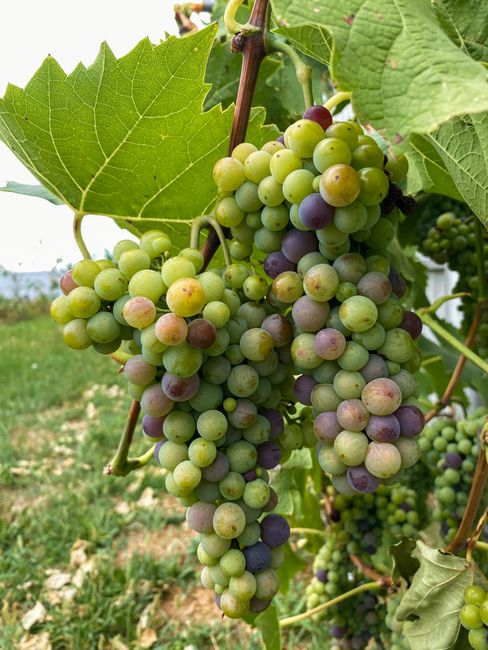
The Hidden Costs of Ineffective Spray Coverage
Vineyard managers often face the challenge of ensuring optimal pesticide efficacy. The initial investment in high-quality chemicals and advanced spray equipment can be undermined by inadequate spray coverage. Without a rigorous post-application assessment, managers are left guessing, potentially leading to significant financial losses. These losses manifest not just as wasted product, but more critically, as increased disease pressure, pest outbreaks, the need for costly re-applications, and ultimately, compromised yield and grape quality. The cumulative impact of suboptimal coverage can erode profit margins and threaten the long-term health of the vineyard. Understanding precisely where and how spray is landing is not merely a best practice; it is a critical component of integrated pest and disease management.
The Science of Post-Application Assessment: Water Sensitive Cards
The most reliable and widely adopted method for assessing spray coverage after application is the use of Water Sensitive Cards (WSCs). These specialized cards, typically yellow, turn blue upon contact with water droplets, providing a visual and quantifiable record of spray deposition.
Essential Specifications and Equipment
- Water Sensitive Cards: Brands such as Syngenta or TeeJet offer reliable WSCs. These are typically 76 x 26 mm or 52 x 76 mm in size.
- Placement Strategy: For comprehensive assessment, place cards at various canopy depths and heights. A recommended approach involves placing at least 3-5 cards per canopy zone (e.g. top, middle, bottom) and on both sides of the vine row, as well as within the canopy interior. For dense canopies, consider placing cards on the petioles or undersides of leaves to check for penetration and underside coverage.
- Application Timing: Cards must be placed immediately before the spray application and retrieved within an hour or two after the spray has dried to prevent degradation or false readings from dew or subsequent rainfall.
- Droplet Density Thresholds: Optimal droplet density varies significantly based on the target and product type. Industry standards suggest the following ranges as a starting point, though specific product labels may provide further guidance:
| Pesticide Type | Target Droplet Density (droplets/cm²) | Coverage (%) |
|---|---|---|
| Contact Fungicides / Insecticides | 85 - 150 | 20 - 30 |
| Systemic Fungicides / Insecticides | 50 - 80 | 10 - 20 |
| Herbicides (Contact) | 20 - 40 | 5 - 10 |
| Herbicides (Systemic) | 10 - 20 | 2 - 5 |
Note: These are general guidelines. Always consult specific product labels for precise recommendations, as some products require higher or lower densities for optimal performance.
Step-by-Step Process for Assessing Coverage
- Preparation and Placement:
- Select representative rows within the block to be sprayed, accounting for variations in vine vigor, canopy density, and terrain.
- Attach WSCs securely to leaves, petioles, or wires at various heights (e.g. 0.6m, 1.2m, 1.8m) and depths (outer canopy, mid-canopy, inner canopy) throughout the vine. Use paperclips or clothespins. For very dense canopies, consider placing cards on the underside of leaves or within fruit clusters.
- Document the exact location of each card for later analysis. A simple sketch or GPS coordinates can be invaluable.
- Ensure appropriate Personal Protective Equipment (PPE) is worn during placement and retrieval, especially when cards might be near freshly sprayed areas.
- Application:
- Conduct the spray application using the standard equipment, settings (pressure, speed, nozzle type), and weather conditions.
- Record all application parameters: sprayer model, nozzle types (e.g. TeeJet XR11004, AIXR11003), pressure (e.g. 80 PSI), travel speed (e.g. 3.5 mph), water volume (e.g. 100 GPA), and environmental conditions (temperature, relative humidity, wind speed and direction).
- Retrieval and Documentation:
- Once the spray has dried (typically 1-2 hours, depending on conditions), carefully retrieve the cards.
- Place each card in a separate, labeled plastic bag or envelope to prevent smudging or contamination. Label with row number, vine number, height, and depth of placement.
- Take clear, high-resolution photographs of each card. These images can be analyzed later using specialized software or visual comparison charts.
- Analysis and Interpretation:
- Visual Assessment: For a quick initial assessment, compare the retrieved cards against standard visual charts provided by WSC manufacturers. Look for uniformity of droplet size and distribution across the card.
- Digital Analysis: For more precise quantification, use a scanner or high-resolution camera to digitize the cards. Specialized software (e.g. SnapCard, DepositScan, or commercial image analysis tools) can then calculate droplet density (droplets/cm²), coverage percentage, and even droplet size (VMD - Volume Median Diameter).
- Compare to Targets: Cross-reference the measured droplet densities and coverage percentages with the recommended thresholds for the specific pesticide and target.
- Troubleshooting and Adjustment:
- Uneven Coverage (Horizontal): If cards show good coverage on one side of the row but poor on the other, check sprayer calibration, nozzle wear, or wind direction during application. Adjust air deflectors or nozzle angles.
- Uneven Coverage (Vertical): Poor coverage at the top or bottom of the canopy may indicate incorrect boom height, insufficient air assistance, or worn nozzles at specific positions. Adjust nozzle selection, pressure, or air volume.
- Poor Penetration (Inner Canopy): Dense canopies often hinder spray penetration. Consider increasing air volume, reducing travel speed, or using nozzles that produce smaller, more penetrating droplets (while being mindful of drift risk). Adjusting nozzle orientation to spray into the canopy rather than just onto the surface can also help.
- Drift: Cards placed outside the target zone showing significant deposition indicate potential drift issues. This often points to excessive pressure, fine droplets, or unfavorable wind conditions. Consider air-induction nozzles for coarser droplets or adjust application timing.
- Nozzle Wear: Inconsistent patterns or reduced coverage across multiple cards, despite consistent settings, often signals worn nozzles. Nozzles should be inspected and replaced annually or after spraying a certain volume of product (e.g. 20,000-50,000 gallons for ceramic nozzles, less for plastic).
Example Scenario (Hypothetical): Addressing Inadequate Canopy Penetration
A vineyard manager uses WSCs in a vigorously growing Cabernet Sauvignon block. Cards placed on the outer canopy show excellent coverage (120 droplets/cm²), but cards placed 30 cm into the canopy and near fruit clusters consistently show only 30-40 droplets/cm². This indicates poor spray penetration. The manager reviews application records via VinoBloc and notes the sprayer was traveling at 3.0 mph with hollow cone nozzles and an air-blast setting of 70% fan speed. To troubleshoot, the manager decides to reduce travel speed to 2.5 mph, increase fan speed to 90%, and angle the lower nozzles slightly upwards into the canopy. A subsequent WSC test confirms improved penetration, with inner canopy cards now showing 70-80 droplets/cm², closer to the target for systemic fungicides.
Example Scenario (Hypothetical): Correcting Uneven Distribution
During a post-veraison spray application in a Pinot Noir block, WSC analysis reveals that cards on the east-facing side of the rows consistently exhibit higher droplet densities (110 droplets/cm²) than those on the west-facing side (60 droplets/cm²). The manager checks the VinoBloc weather log for the application period and confirms a consistent light breeze (3-5 mph) from the east. This wind was likely pushing spray more effectively onto the east side and causing some drift away from the west side. To mitigate this, the manager adjusts future spray timings to periods of minimal wind (below 3 mph) or considers using air-induction nozzles on the west side of the sprayer to produce larger, less drift-prone droplets, while maintaining appropriate coverage on the east side.
Actionable Next Steps for Continuous Improvement
- Regular Assessment Protocol: Implement a standard operating procedure for WSC placement and analysis for at least one block per spray event, or whenever sprayer settings are significantly changed, and at different growth stages (e.g. pre-bloom, post-fruit set, veraison).
- Calibrate and Adjust: Based on WSC results, make precise adjustments to sprayer settings—nozzle type, pressure, travel speed, and air volume. Re-test after adjustments to confirm efficacy.
- Optimize Nozzle Selection: Investigate specialized nozzles (e.g. air induction, twin-fluid) that can improve penetration or reduce drift, especially for challenging canopy architectures or environmental conditions.
- Leverage Data Analytics: Utilize vineyard management software like VinoBloc to log all spray application parameters, WSC assessment results, and subsequent disease/pest pressure observations. This data provides a historical record for informed decision-making and trend analysis.
- Ongoing Training: Ensure all sprayer operators are trained in proper calibration, WSC placement, and understanding the impact of their settings on coverage quality.
Implementation Timeline and Success Metrics
- Timeline: Integrate WSC assessments into pre-season planning and conduct them at critical growth stages (e.g. tight cluster, pre-bloom, post-fruit set, veraison) or whenever a new product or application method is introduced.
- Success Metrics: Track reductions in disease incidence and severity scores, fewer re-spray requirements, optimized pesticide usage (cost savings), and consistent grape quality metrics. A quantifiable goal could be to achieve target droplet densities across 80-90% of assessed cards in critical canopy zones.
VinoBloc Team
Vineyard Management Experts
Ready to Transform Your Vineyard Management?
See how VinoBloc can help you streamline block-level data and harvest decisions.