
Vineyard Financial Management: Tracking Costs, Pricing Grapes, and Planning for Profit
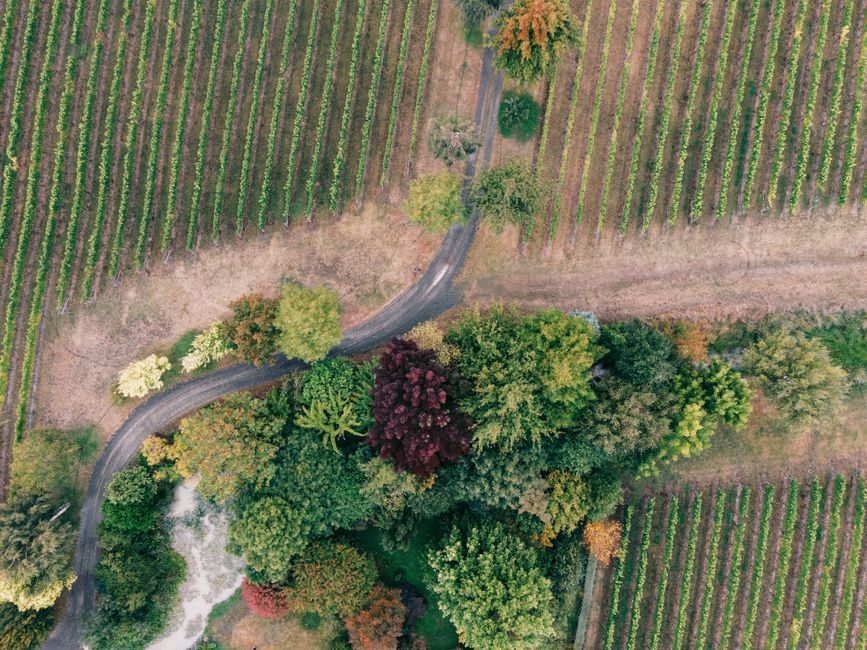
Vineyard operations, while often romanticized, are complex agricultural businesses that demand astute financial management. The difference between a successful, sustainable vineyard and one perpetually struggling often lies in the precision of its financial tracking, the strategic foresight in its pricing, and the robustness of its profit planning. This comprehensive guide delves into the essential financial practices that empower vineyard owners and managers to navigate the inherent volatilities of viticulture, from the intricate details of cost-per-block analysis to the critical strategies for surviving a low-yield year.
Executive Summary
This authoritative guide is designed for vineyard owners, operators, financial managers, and aspiring viticulturists who seek to elevate their financial acumen and secure the long-term profitability of their vineyard operations. It addresses the pervasive challenge of opaque financial performance, where overall profitability often masks inefficient blocks or suboptimal pricing strategies. Many vineyards operate with a general sense of their financial health, but lack the granular data necessary for informed decision-making, leading to missed opportunities and increased vulnerability to market fluctuations and environmental challenges.
Upon completing this deep dive, readers will be equipped to:
- Implement a robust cost-per-block tracking system to identify profit centers and cost sinks.
- Develop precise budgets for labor, materials, and other inputs, optimizing resource allocation.
- Formulate strategic grape pricing models and negotiate favorable contract terms that reflect true production costs and market value.
- Conduct comprehensive break-even analyses and establish clear profit targets for sustainable growth.
- Construct resilient financial plans to mitigate the impact of adverse events, such as low yield years.
This guide offers practical, actionable insights supported by real-world data and step-by-step processes, empowering vineyard professionals to transition from reactive financial management to proactive, data-driven profitability. Estimated reading time: 18-25 minutes.
Table of Contents
- Executive Summary
- Why Robust Vineyard Financial Management is Non-Negotiable
- Deconstructing Vineyard Costs: The Power of Cost-Per-Block Tracking
- Optimizing Labor and Input Budgeting for Vineyard Efficiency
- Strategic Grape Pricing and Mastering Contract Negotiations
- Break-Even Analysis and Proactive Profit Planning
- Building Resilience: Planning for Unpredictable Yield Years
- Tools & Resources
- Key Takeaways
Why Robust Vineyard Financial Management is Non-Negotiable
Vineyard financial management extends far beyond basic bookkeeping; it is the strategic backbone that supports every operational decision and long-term investment. The viticulture industry is characterized by significant upfront capital investment, multi-year returns on new plantings, susceptibility to weather events, disease pressure, and fluctuating market demands. Without a robust financial framework, vineyards risk operating inefficiently, misallocating resources, and facing severe challenges during adverse periods. Industry experts advocate for comprehensive financial oversight as a critical determinant of sustainability and growth.
Consider the substantial capital required to establish a vineyard. A new planting in a premium region can incur costs ranging from $30,000 to $50,000 per acre for land preparation, trellising, irrigation, and young vines, not including the cost of land itself, which can easily exceed $100,000 per acre in desirable appellations. These investments require years to mature and generate significant returns, making precise financial forecasting and cost recovery paramount. Annual operating expenses, encompassing labor, materials, and machinery, can range from $3,000 to $10,000+ per acre, depending on the region, varietal, and management practices (e.g. conventional vs. organic).
The core problem that effective financial management solves is the transformation of raw operational data into actionable insights. It shifts the focus from merely recording transactions to understanding the true cost of production, identifying profit drivers, and pinpointing areas of inefficiency. For example, a vineyard manager might observe high overall labor costs, but without detailed tracking, it remains unclear whether these costs are driven by specific blocks, particular tasks, or overall inefficiency. Robust financial management provides the clarity needed to make data-driven decisions, such as optimizing pruning strategies, adjusting irrigation schedules, or re-evaluating varietal selections for specific blocks.
Regional considerations play a significant role in financial planning. Vineyards in regions like Napa Valley, California, face exceptionally high land values and labor costs, necessitating premium grape prices and meticulous cost control. Conversely, operations in regions like the Central Valley, California, or the Finger Lakes, New York, may have lower land and labor costs but might also contend with lower average grape prices, requiring high efficiency and larger scale to achieve profitability. Each region presents its unique set of cost structures and market dynamics that must be accurately reflected in financial models.
Common Mistakes: A prevalent error is treating the vineyard as a single cost center rather than breaking down expenses by individual blocks or varietals. This approach obscures the true profitability of different vineyard sections, leading to suboptimal resource allocation. Another common pitfall is neglecting to account for non-cash expenses like depreciation, which can significantly impact the accurate calculation of net profit and tax liabilities.
Deconstructing Vineyard Costs: The Power of Cost-Per-Block Tracking
Effective cost-per-block tracking is the cornerstone of informed vineyard financial management. It involves segmenting the vineyard into distinct blocks and meticulously attributing all associated costs to each. This granular approach allows managers to pinpoint which blocks are most profitable, which require intervention, and where efficiencies can be gained, moving beyond a vineyard-wide average that can mask critical performance differences.
Vineyard costs are broadly categorized into variable and fixed expenses. Variable costs fluctuate with the level of activity or yield and include items like labor for pruning, shoot thinning, and harvest; pest and disease control materials (e.g. fungicides at $30-70/acre/application, insecticides at $20-50/acre/application); fertilizers (e.g. nitrogen at $0.50-$1.00/lb N); and irrigation water (e.g. $10-30/acre-inch). Fixed costs, conversely, remain relatively constant regardless of production volume and include property taxes, insurance, depreciation on equipment and infrastructure, permanent labor salaries, and management overhead.
Step-by-Step Process for Implementing Cost-Per-Block Tracking:
- Define Vineyard Blocks: Clearly delineate each block based on varietal, rootstock, clone, age, soil type, irrigation zone, or management style. Assign a unique identifier to each block.
- Categorize Expenses: Establish a comprehensive chart of accounts. For each expense, determine if it is directly attributable to a specific block (e.g. specific spray application, hand-pruning hours) or if it's a shared expense (e.g. tractor fuel, administrative salaries).
- Track Direct Costs: For all direct variable costs, ensure that records explicitly link the expense to the relevant block. For example, a spray log should include the chemical used, application rate, date, and specific blocks treated. Labor time sheets must detail hours spent on particular tasks within each block.
- Allocate Shared Costs: Fixed costs and shared variable costs (e.g. general equipment maintenance, management salaries) need to be allocated across blocks. Common allocation methods include:
- Per Acre: Distribute costs evenly based on the acreage of each block.
- Per Production Unit (e.g. Ton): Allocate based on the expected yield of each block.
- Percentage of Direct Costs: Assign based on the proportion of direct costs incurred by each block.
For example, if total fixed costs are $100,000 and the vineyard has 100 acres, $1,000 per acre would be allocated. If Block A is 10 acres, it receives $10,000 of fixed cost allocation.
- Implement a Tracking System: Utilize vineyard management software like Vinobloc to record all expenses. This software allows for detailed input of labor hours, material usage, and equipment operation, associating them directly with specific blocks and tasks. It can then generate reports on cost-per-block, cost-per-ton, and overall profitability.
Example Cost Breakdown per Acre for Two Blocks:
| Cost Category | Block A (Cabernet Sauvignon - High Density) | Block B (Chardonnay - Standard Density) |
|---|---|---|
| Pruning Labor (per acre) | $700 (hand) | $450 (mix hand/machine) |
| Spray Materials (per acre) | $350 | $280 |
| Irrigation (per acre) | $120 | $90 |
| Harvest Labor (per acre) | $800 (hand) | $550 (machine) |
| Fertilizer (per acre) | $70 | $60 |
| Allocated Fixed Costs (per acre) | $1,500 | $1,500 |
| Total Cost per Acre | $3,540 | $2,930 |
| Estimated Yield (tons/acre) | 4.0 | 6.0 |
| Cost per Ton | $885 | $488 |
This table illustrates how different varietals and management practices lead to vastly different cost structures, even within the same vineyard. Block A, with its higher-value Cabernet Sauvignon and hand-intensive management, has a significantly higher cost per ton, which must be reflected in its selling price.
Regional Considerations: Water rights and costs vary dramatically by region. In drought-prone areas like California, water can be a major expense, with prices for purchased water reaching hundreds of dollars per acre-foot. In rainier regions like the Pacific Northwest or parts of New York, irrigation costs may be minimal, but disease pressure (and thus spray costs) could be higher. Land values and property taxes also vary widely, directly impacting fixed cost allocation.
Common Mistakes: A critical error is failing to consistently track all inputs and labor hours, leading to incomplete data. Another mistake is using overly simplistic allocation methods for shared costs, which can distort the true profitability of individual blocks. Neglecting to review and adjust cost categories annually can also lead to inaccuracies as operations evolve.
Optimizing Labor and Input Budgeting for Vineyard Efficiency
Labor and material inputs represent the largest operational expenses for most vineyards, often accounting for 40-60% of total annual costs. Efficient management of these resources is paramount for profitability. A detailed budget, coupled with rigorous tracking, allows vineyards to control spending, identify cost-saving opportunities, and ensure resources are allocated effectively.
Labor Cost Analysis and Budgeting:
Labor is typically the single largest expense. It includes permanent staff (vineyard manager, foreman), seasonal workers (pruning, canopy management, harvest), and contract labor (specialized tasks). Understanding the cost per task and per block is crucial. For instance, hand pruning can cost $300-600 per acre, while mechanical pre-pruning followed by hand finishing might reduce this to $200-400 per acre, but requires capital investment in machinery. Harvest labor can range from $500-1,000 per acre for hand-picking, compared to $150-300 per acre for machine harvesting.
Step-by-Step Labor Budgeting:
- Forecast Task-Specific Labor Needs: Based on historical data and projected vineyard activities, estimate the hours required for each task (e.g. pruning, shoot thinning, leaf pulling, irrigation management, pest scouting, harvest) for each block.
- Calculate Labor Costs: Multiply estimated hours by the average hourly wage (e.g. $15-25/hour, including benefits and payroll taxes) for each labor category. Account for overtime and seasonal wage fluctuations.
- Develop a Monthly/Quarterly Labor Budget: Distribute the annual labor costs across the growing season to reflect seasonal peaks and troughs.
- Track Actual vs. Budgeted Hours/Costs: Use time cards or vineyard management software like Vinobloc to record actual labor hours for each task and block. Regularly compare actual expenditures against the budget to identify variances. If pruning labor is consistently exceeding budget in a particular block, investigate the cause (e.g. vine vigor, worker efficiency, training issues).
- Optimize Labor Deployment: Based on tracking, identify opportunities for efficiency. Can certain tasks be mechanized? Can cross-training improve flexibility? Is contract labor more cost-effective for specific peak demands than hiring permanent staff?
Input Budgeting (Materials, Water, Energy):
Inputs include fertilizers, pesticides, herbicides, irrigation water, fuel, and electricity. Prices for these commodities can fluctuate significantly, necessitating proactive budgeting and procurement strategies.
Step-by-Step Input Budgeting:
- Assess Historical Usage and Future Needs: Review past purchasing records and consult with viticulturists to project requirements for the upcoming season. Consider factors like disease pressure forecasts, soil test results, and planned canopy management. For example, if a block typically requires 100 lbs of nitrogen per acre, and fertilizer costs $0.80/lb, the budget for nitrogen for that block is $80/acre.
- Research Supplier Pricing and Negotiate: Obtain quotes from multiple suppliers for bulk purchases. For example, purchasing 500 gallons of a common fungicide might be 15-20% cheaper per gallon than buying 50 gallons at a time.
- Develop a Detailed Input Budget: Create a line-item budget for each major input category, broken down by block where applicable.
- Implement Inventory Control: Track inventory levels for all chemicals and fertilizers. This prevents over-ordering, reduces waste, and ensures availability when needed. Vinobloc can manage inventory and link usage directly to specific blocks and applications.
- Monitor and Adjust: Regularly compare actual input usage and costs against the budget. If pesticide usage is higher than budgeted, investigate the cause (e.g. increased pest pressure, inefficient application, miscalibration). If coverage is uneven, check for clogged nozzles or incorrect boom height.
Annual Labor Budget Example for a 50-Acre Vineyard:
| Task | Estimated Hours/Acre | Total Hours (50 acres) | Average Hourly Rate | Estimated Cost |
|---|---|---|---|---|
| Pruning (Hand) | 25 | 1,250 | $20.00 | $25,000 |
| Shoot Thinning/Tucking | 15 | 750 | $18.00 | $13,500 |
| Leaf Pulling | 10 | 500 | $18.00 | $9,000 |
| Irrigation Management | 5 | 250 | $22.00 | $5,500 |
| Harvest (Hand) | 30 | 1,500 | $25.00 | $37,500 |
| Other (Mowing, Repairs) | 10 | 500 | $20.00 | $10,000 |
| Total Estimated Labor Cost | 4,750 | $100,500 |
Regional Considerations: Minimum wage laws vary significantly, impacting hourly rates. For example, California's minimum wage is higher than many other states, directly increasing labor costs. Availability of seasonal labor also fluctuates by region, affecting both cost and efficiency. Water rights and pricing are highly regionalized; vineyards in arid regions may face significantly higher water costs and stricter usage regulations.
Common Mistakes: Underestimating labor hours, especially for less frequent but time-consuming tasks, is a frequent error. Failing to account for all associated labor costs (e.g. payroll taxes, worker's compensation insurance, benefits) distorts the true cost per hour. For inputs, not getting competitive bids or failing to track inventory accurately can lead to unnecessary expenses and waste.
Strategic Grape Pricing and Mastering Contract Negotiations
Grape pricing is not merely setting a number; it is a strategic decision that directly impacts a vineyard's revenue and long-term viability. It must reflect the true cost of production, the quality and uniqueness of the fruit, and the prevailing market dynamics. Mastering contract negotiations ensures that these prices are secured under favorable terms.
Factors Influencing Grape Price:
- Cost of Production: The absolute minimum price must cover all variable and fixed costs, plus a reasonable profit margin. As demonstrated in cost-per-block analysis, this can vary significantly by varietal and block.
- Varietal and Appellation: Premium varietals from renowned appellations command higher prices. For example, Napa Valley Cabernet Sauvignon can fetch $5,000-$10,000+ per ton, while Central Valley Zinfandel might range from $500-$1,500 per ton.
- Quality Metrics: Brix levels, pH, titratable acidity, color intensity, and phenolic ripeness are critical quality indicators. Wineries often pay premiums for fruit that consistently meets or exceeds specific targets.
- Market Demand: The supply and demand balance for specific varietals in a given vintage significantly influences pricing. Oversupply can drive prices down, while strong demand can push them higher.
- Buyer Relationship: Long-term relationships with wineries can lead to more stable pricing, but vineyards must still ensure prices remain competitive and profitable.
Step-by-Step Grape Pricing Strategy:
- Calculate Your True Cost of Production: Utilize the cost-per-block data to determine the specific cost per ton for each varietal and block. Add a desired profit margin (e.g. 15-30%) to this cost to establish a target selling price.
- Research Market Prices: Consult industry reports (e.g. USDA-NASS grape crush reports, specific regional wine industry association reports), speak with brokers, and network with other growers to understand current market rates for similar varietals and quality levels in your region.
- Assess Your Unique Value Proposition: What makes your grapes special? Specific clones, sustainable farming practices, unique terroir, or consistent high quality can justify a premium.
- Determine Pricing Model: Common models include:
- Per Ton: The most common, straightforward.
- Per Acre: Less common, often used for smaller, high-value blocks where consistent quality is paramount, and the winery assumes yield risk.
- Brix-Based: A base price per ton with adjustments based on actual Brix at harvest. For example, a contract might specify a target of 24 Brix with a $50/ton adjustment for every 1 Brix point above or below the target.
- Quality-Based: Bonuses or penalties tied to specific laboratory analyses (e.g. pH, TA, specific phenolic compounds) or sensory evaluations.
Key Grape Contract Terms to Negotiate:
A well-structured grape contract protects both the grower and the buyer. Focus on these critical elements:
- Price and Payment Terms: Clearly define the price, pricing model, and payment schedule (e.g. 25% upon signing, 25% upon delivery, 50% net 60 days after harvest). Negotiate for prompt payment terms to manage cash flow.
- Quality Specifications: Detail all required quality metrics (Brix range, pH, TA, visual standards for disease/MOG). Include clear language on how fruit not meeting specifications will be handled (e.g. discounted, rejected).
- Tonnage and Yield Management: Specify minimum and maximum tonnage commitments. Include clauses for yield adjustments if adverse weather or disease significantly impacts production. Wineries often prefer a tonnage range (e.g. 3-5 tons/acre) to manage their production.
- Delivery and Harvest Schedule: Define who determines harvest timing, delivery windows, and transportation responsibilities.
- Force Majeure: Include clauses that address unforeseen circumstances beyond either party's control (e.g. extreme weather, wildfires, disease outbreaks) that prevent contract fulfillment.
- Duration and Renewal: Consider multi-year contracts for stability, but ensure annual price review mechanisms or market adjustment clauses are included.
Grape Pricing Models Comparison:
| Pricing Model | Pros for Grower | Cons for Grower |
|---|---|---|
| Per Ton | Clear, widely understood, rewards higher yields. | Yield variability impacts revenue; quality not directly rewarded. |
| Per Acre | Revenue stability regardless of yield; winery assumes yield risk. | Less common; requires strong trust; may not reward exceptional yields. |
| Brix-Based | Incentivizes optimal ripeness; aligns grower/winery goals. | Requires precise measurement; penalties for under/over ripeness. |
| Quality-Based | Rewards superior fruit; potential for premium pricing. | Subjective measurements; complex terms; potential for disputes. |
Regional Considerations: In regions with a high concentration of wineries, growers may have more leverage in negotiations. In emerging regions, growers might need to offer more flexible terms to secure initial contracts. The specific legal frameworks for agricultural contracts also vary by state and region.
Common Mistakes: Not knowing your cost of production before entering negotiations is a fundamental error that can lead to selling grapes at a loss. Accepting vague quality specifications or unfavorable payment terms (e.g. net 180 days) can severely impact cash flow and profitability. Failing to include a force majeure clause can leave a vineyard exposed to catastrophic losses from unforeseen events.
Break-Even Analysis and Proactive Profit Planning
A break-even analysis is a crucial financial tool that determines the minimum production volume (in tons) or revenue (in dollars) a vineyard needs to achieve to cover all its costs. Beyond simply covering costs, proactive profit planning involves setting clear financial targets and developing strategies to exceed the break-even point consistently.
Understanding Break-Even:
The break-even point is where total revenue equals total costs, resulting in zero profit. Operating below this point means incurring losses, while operating above it generates profit. It provides a clear target for sales and production.
Break-Even Calculation Method:
The fundamental formula for break-even analysis is:
Break-Even Point (in Units) = Total Fixed Costs / (Selling Price Per Unit - Variable Cost Per Unit)
Where:
- Total Fixed Costs: Sum of all expenses that do not change with production volume (e.g. property taxes, insurance, depreciation, management salaries). For a 50-acre vineyard, this might be $150,000 annually.
- Selling Price Per Unit: The price per ton of grapes (e.g. $2,000/ton).
- Variable Cost Per Unit: The cost to produce one additional ton of grapes (e.g. additional harvest labor, materials directly tied to yield). For a 50-acre vineyard, this might be $1,000/ton.
Step-by-Step Break-Even Analysis:
- Identify Total Fixed Costs: Aggregate all fixed expenses for the vineyard (or per block for a more granular analysis).
- Calculate Variable Cost Per Ton: Using your cost-per-block data, determine the average variable cost associated with producing one ton of grapes. This includes labor for harvest, some material costs, and processing fees if applicable.
- Determine Average Selling Price Per Ton: Use your anticipated grape contracts or historical average selling prices.
- Apply the Formula:
Example: A 50-acre vineyard with total fixed costs of $150,000, a variable cost per ton of $1,000, and an average selling price of $2,000 per ton.
Break-Even Point = $150,000 / ($2,000 - $1,000)
Break-Even Point = $150,000 / $1,000
Break-Even Point = 150 tons
This vineyard needs to produce and sell 150 tons of grapes to cover all its costs. If the average yield is 4 tons/acre, this means 37.5 acres must be in production (150 tons / 4 tons/acre).
Proactive Profit Planning:
Once the break-even point is known, the focus shifts to strategic planning for profitability.
- Set Profit Targets: Define specific profit goals (e.g. 15% net profit margin, $X return on investment). These targets should be realistic but ambitious.
- Scenario Planning: Conduct sensitivity analyses by varying key assumptions. What if prices drop by 10%? What if yields are 20% lower than expected? How does this impact the break-even point and profitability?
- Revenue Forecasting: Based on historical yields, market projections, and contract terms, forecast expected revenue for the upcoming season. Compare this to your profit targets.
- Cost Control Initiatives: Identify areas where costs can be reduced without compromising quality. This might involve optimizing labor schedules, negotiating better input prices, or investing in more efficient equipment.
- Yield Optimization Strategies: Implement viticultural practices aimed at achieving optimal yields and quality. This could include precision irrigation, canopy management, or disease prevention programs.
Break-Even Scenario Analysis (50-Acre Vineyard):
| Scenario | Total Fixed Costs | Variable Cost/Ton | Price/Ton | Break-Even (Tons) | Break-Even (Acres @ 4 T/A) |
|---|---|---|---|---|---|
| Base Case | $150,000 | $1,000 | $2,000 | 150 | 37.5 |
| Price Drop (10%) | $150,000 | $1,000 | $1,800 | 187.5 | 46.9 |
| Cost Increase (10%) | $150,000 | $1,100 | $2,000 | 166.7 | 41.7 |
| Increased Price & Efficiency | $150,000 | $950 | $2,200 | 120 | 30.0 |
This table demonstrates how changes in price, cost, or a combination thereof significantly shift the break-even point, highlighting the importance of proactive management.
Regional Considerations: Different regions have varying fixed cost structures (e.g. property taxes, land lease rates, insurance premiums). These must be accurately captured in the fixed cost component. Variable costs, particularly labor and water, also exhibit regional differences, influencing the variable cost per ton. For example, a vineyard in a high-tax, high-labor-cost region will have a higher break-even point than a similar vineyard in a lower-cost region.
Common Mistakes: A frequent error is not updating break-even calculations annually or even mid-season if significant cost or price changes occur. Many vineyards fail to integrate cash flow projections with their break-even analysis, leading to liquidity issues even if they are theoretically profitable. Setting unrealistic profit targets without a clear strategy for achieving them is also a common pitfall.
Building Resilience: Planning for Unpredictable Yield Years
Viticulture is inherently susceptible to the whims of nature. Frost, hail, drought, excessive rain, disease outbreaks, and heatwaves can all drastically reduce yields, turning a projected profitable year into a significant financial challenge. Proactive planning for such unpredictable yield years is essential for a vineyard's long-term survival and financial stability.
Key Strategies for Mitigating Risk:
- Crop Insurance: This is a fundamental risk management tool. Policies like Actual Production History (APH) insurance cover losses due to natural disasters, compensating growers when yields fall below a historical average. Coverage levels typically range from 50% to 75% of the average yield, with deductibles (e.g. 25-35%) applied. Premiums vary based on coverage level, historical yield variability, and region. For example, a vineyard with an APH of 5 tons/acre and 75% coverage would be insured for 3.75 tons/acre. If actual yield drops to 2 tons/acre, the insurance would cover the difference of 1.75 tons/acre at a predetermined price.
- Establish Cash Reserves: Building an emergency fund equivalent to 3-6 months of operating expenses provides a crucial buffer during low-yield years or market downturns. This allows the vineyard to cover fixed costs and essential variable costs without resorting to high-interest debt or distress sales.
- Diversification: While not always feasible for grape-only operations, some vineyards diversify by growing multiple varietals (some more resilient to certain conditions), offering custom farming services, or integrating agritourism (e.g. tasting room, events) to create alternative revenue streams.
- Flexible Grape Contracts: Negotiate contracts that include clauses addressing yield variability. This might involve a tonnage range rather than a fixed commitment, or a "force majeure" clause that allows for renegotiation or contract termination under extreme, unforeseen circumstances. Transparent communication with buyers during a crisis is paramount.
- Cost Control and Efficiency: In a year with anticipated low yields, aggressive cost-cutting measures become critical. This could involve deferring non-essential capital expenditures, optimizing labor schedules, or temporarily reducing certain input applications (e.g. reducing fertilizer if vine vigor is naturally lower due to stress).
- Access to Credit: Establish strong relationships with agricultural lenders to ensure access to lines of credit that can bridge cash flow gaps during difficult seasons.
Risk Mitigation Strategies Comparison:
| Strategy | Pros | Cons | Implementation Note |
|---|---|---|---|
| Crop Insurance | Direct financial compensation for yield loss. | Premiums are an annual expense; coverage limits. | Review policy annually; understand specific perils covered. |
| Cash Reserves | Immediate liquidity; no debt incurred. | Requires disciplined saving; capital tied up. | Target 3-6 months of operating expenses. |
| Flexible Contracts | Reduces legal/financial burden during low yields. | May reduce buyer commitment; requires strong relationship. | Negotiate tonnage ranges & force majeure clauses. |
| Cost Control | Directly impacts profitability; within grower's control. | Can impact long-term vine health if too severe. | Prioritize essential vs. deferrable expenses. |
Regional Considerations: Specific climate risks vary by region. Vineyards in regions like the Columbia Valley, Washington, might face hail risk, while those in Oregon or New York grapple with frost. California vineyards are increasingly exposed to drought and wildfire smoke taint. Crop insurance products are often tailored to these regional risks. Understanding the specific perils most likely to impact your region is critical for selecting appropriate insurance and mitigation strategies.
Common Mistakes: A significant mistake is underinsuring or failing to understand the specifics of crop insurance policies, leading to inadequate coverage when a loss occurs. Not having an emergency fund leaves vineyards vulnerable to short-term cash flow crises. Entering into rigid, multi-year contracts without force majeure clauses can be disastrous during widespread regional crop failures. Failing to communicate proactively with buyers during a challenging season can damage relationships and lead to contract disputes.
Tools & Resources
Effective financial management in a vineyard relies on the right tools and resources to gather data, analyze performance, and make informed decisions.
Essential Equipment:
- Precision Sprayers: Modern sprayers with GPS guidance and individual nozzle control can reduce chemical waste by 10-20%, directly impacting input costs.
- Weather Stations: On-site weather stations provide crucial data for disease modeling, irrigation scheduling, and frost protection, optimizing input usage and reducing risk.
- Soil Moisture Probes: These devices enable precise irrigation, reducing water consumption by 15-30% in many vineyards, which is critical in water-stressed regions.
- Fuel Management Systems: Tracking fuel consumption per tractor and implement helps monitor efficiency and identify maintenance needs.
Vineyard Management Software:
Vinobloc is a comprehensive vineyard management software solution designed to integrate operational data with financial tracking. Its features are invaluable for robust financial management:
- Cost Allocation Module: Allows for detailed input of labor hours, material usage, and equipment operation, automatically associating costs with specific blocks, varietals, and tasks. This is fundamental for accurate cost-per-block analysis.
- Budgeting and Forecasting Tools: Enables users to create detailed annual budgets for labor, inputs, and overhead. It facilitates real-time tracking of actual expenses against budget, providing alerts for variances.
- Labor Tracking: Records individual employee hours by task and block, simplifying payroll and providing granular data for labor cost analysis and optimization.
- Inventory Management: Tracks usage of chemicals, fertilizers, and other materials, linking them to specific applications and blocks, helping to control input costs and prevent waste.
- Reporting and Analytics: Generates customizable financial reports, including cost-per-ton, block profitability, expense summaries, and cash flow projections, offering deep insights into vineyard financial performance.
Helpful Templates & Checklists:
- Vineyard Annual Budget Template: A detailed spreadsheet covering all fixed and variable costs, broken down by month and category.
- Cost-Per-Block Tracking Spreadsheet: A template to record direct and allocated costs for each vineyard block, facilitating the calculation of cost-per-ton.
- Grape Contract Checklist: A comprehensive list of essential terms to include and negotiate in grape sales contracts.
- Cash Flow Projection Template: A tool to forecast monthly inflows and outflows, helping to manage liquidity.
Key Takeaways
Mastering vineyard financial management is indispensable for long-term success. Implement these actionable strategies to optimize profitability and build resilience:
- Embrace Cost-Per-Block Tracking: Move beyond vineyard-wide averages to understand the true profitability and cost drivers of each individual block. This granular data is the foundation for all strategic financial decisions.
- Optimize Labor and Input Budgets: Meticulously plan and track all labor hours and material inputs. Regularly compare actuals against budgets to identify inefficiencies and opportunities for cost savings.
- Strategically Price Grapes: Base your grape pricing on a clear understanding of your cost of production, market demand, and the unique quality proposition of your fruit. Do not undervalue your product.
- Master Contract Negotiations: Negotiate comprehensive grape contracts that protect your interests, including clear pricing, payment terms, quality specifications, tonnage flexibility, and force majeure clauses.
- Conduct Regular Break-Even Analysis: Know your break-even point and use it as a dynamic target. Regularly update this calculation and use scenario planning to understand the impact of varying yields, prices, and costs on profitability.
- Build Financial Resilience: Proactively plan for unpredictable yield years through crop insurance, establishing robust cash reserves, and negotiating flexible contract terms. Adapt quickly to adverse conditions with focused cost control.
- Leverage Technology: Utilize vineyard management software like Vinobloc to streamline data collection, automate cost allocation, enhance budgeting, and generate insightful financial reports, transforming raw data into actionable intelligence.
VinoBloc Team
Vineyard Management Experts
Ready to Transform Your Vineyard Management?
See how VinoBloc can help you streamline block-level data and harvest decisions.