Mastering Pinot Noir: A Deep Dive into Disease, Canopy & Harvest Precision
Mastering Pinot Noir: A Deep Dive into Disease Pressure, Canopy Management, and Harvest Timing
Executive Summary
Pinot Noir is a grape variety revered for its elegance and complexity, yet it presents some of the most formidable challenges to viticulturists. This comprehensive guide is designed for vineyard managers, viticulturists, and serious growers operating in cool-climate regions, particularly those navigating the unique conditions of areas like the Willamette Valley. It addresses the critical management decisions that, if not executed with precision, can lead to significant crop loss, diminished wine quality, and increased operational costs.
The guide tackles Pinot Noir's inherent vulnerabilities, such as its thin skin and tight clusters, which predispose it to fungal diseases like Botrytis. It outlines strategies for proactive disease management, emphasizing cultural practices and judicious chemical intervention. Furthermore, it delves into the nuances of canopy management, detailing how specific decisions impact air circulation, light penetration, and ultimately, fruit quality and disease susceptibility. Precision in harvest timing, balancing sugar, acid, and phenolic ripeness, is also explored as a critical factor for producing high-quality Pinot Noir. Finally, the article highlights regional challenges, like frost risk at bud break, and provides actionable advice to mitigate these threats, ensuring a sustainable and successful Pinot Noir program.
What You Will Learn:
- Strategies for proactive disease management, with a strong focus on preventing Botrytis bunch rot.
- Optimizing canopy architecture to enhance air circulation and light exposure within the fruit zone.
- Precision techniques for assessing and determining physiological ripeness for harvest.
- Effective methods for mitigating frost risk at bud break and managing late-season canopy dynamics.
- Regional adaptations and best practices for growing Pinot Noir in cool-climate appellations.
Estimated Reading Time: Approximately 18-22 minutes
Table of Contents
- Why Pinot Noir Demands Precision: Understanding Its Unique Vulnerabilities
- Mastering Pinot Noir Canopy Management for Disease Prevention and Quality
- Proactive Disease Pressure Management in Pinot Noir: Focusing on Botrytis
- The Art and Science of Pinot Noir Harvest Timing
- Regional Focus: Pinot Noir Challenges and Adaptations in the Willamette Valley
- Tools & Resources for Pinot Noir Viticulture
- Key Takeaways for Growing Pinot Noir
Why Pinot Noir Demands Precision: Understanding Its Unique Vulnerabilities
Pinot Noir, a noble grape variety, is often described as a "heartbreak grape" due to its demanding nature and susceptibility to various viticultural challenges. Its inherent characteristics make it particularly vulnerable to environmental stressors and diseases, necessitating meticulous management from bud break to harvest. Understanding these vulnerabilities is the first step toward successful cultivation.
One of Pinot Noir's primary challenges stems from its thin skin, typically ranging from 50-70 micrometers (µm), significantly thinner than varieties like Cabernet Sauvignon (100-120 µm). This delicate epidermal layer offers less physical protection against fungal pathogens and mechanical damage. Furthermore, its tightly packed clusters create an ideal microclimate for disease development. The limited air circulation within dense clusters, combined with high humidity, forms a perfect breeding ground for Botrytis cinerea, commonly known as grey mold or bunch rot. Studies indicate that cluster compactness is directly correlated with Botrytis incidence, with very compact clusters showing up to five times higher infection rates than loose clusters under similar conditions.
Pinot Noir's early bud break is another critical vulnerability, particularly in cool-climate regions. While early bud break can extend the growing season, it also exposes the nascent shoots to spring frost events. A temperature drop below -2°C (28°F) for even a short duration can cause significant damage or complete loss of primary buds, forcing the vine to rely on less fruitful secondary buds, thereby reducing overall yield and potentially delaying ripening. In regions like the Willamette Valley, where spring frosts are not uncommon into late April or early May, this presents a recurring threat.
The vigorous growth habit of many Pinot Noir clones, especially when planted on fertile soils or with inappropriate rootstocks, can lead to overly dense canopies. While vigor itself is not detrimental, uncontrolled vigor complicates canopy management, reducing light penetration into the fruit zone and impeding air movement. This dense, shaded, and humid environment further exacerbates the risk of fungal diseases, including Botrytis and Powdery Mildew. Effective management requires precise interventions to balance vegetative growth with reproductive development, ensuring optimal conditions for fruit maturation and health.
Common Mistakes:
- Underestimating Early-Season Vigor: Neglecting early shoot thinning can lead to an unmanageable canopy that is difficult to correct later in the season.
- Ignoring Frost Protection: Assuming mild spring conditions will persist can result in devastating losses if a late frost occurs, especially with Pinot Noir's early bud break.
- Planting in Unsuitable Sites: Placing Pinot Noir in frost-prone pockets or areas with poor air drainage significantly increases disease and frost risk.
Mastering Pinot Noir Canopy Management for Disease Prevention and Quality
Effective canopy management is paramount for Pinot Noir, serving as the first line of defense against disease and a crucial determinant of fruit quality. The goal is to create an open, balanced canopy that allows for optimal sunlight penetration into the fruit zone, promotes air circulation, and facilitates thorough spray coverage. For Pinot Noir, a Vertical Shoot Position (VSP) training system is widely adopted due to its ability to organize shoots and expose fruit efficiently.
The process begins early in the season with shoot thinning, typically when shoots are 4-6 inches (10-15 cm) long. This step is critical for establishing desired shoot density, which ideally ranges from 4-6 shoots per linear foot (12-18 shoots per meter) of cordon. Over-thinning can reduce yield and expose fruit to sunburn, while under-thinning leads to a dense, shaded canopy. The aim is to remove infertile shoots, weak shoots, and duplicates, prioritizing well-spaced, fruitful canes. This early intervention helps direct the vine's energy efficiently and sets the stage for a manageable canopy.
As shoots grow, VSP wiring is essential. Shoots are tucked upwards between sets of movable wires, ensuring they grow vertically and remain separated. This practice should begin once shoots are long enough to reach the first wire, typically 8-12 inches (20-30 cm), and continue every 10-14 days until the canopy reaches the top wire. Consistent wiring prevents shoots from tangling, which can create a dense, humid microclimate around clusters and hinder air movement, a major contributor to Botrytis development.
Basal leaf removal, performed after fruit set and ideally before veraison, is another critical technique. Removing 2-4 basal leaves per shoot, typically on the morning sun side, enhances air circulation around the clusters, reduces humidity, and improves fungicide penetration. Research shows that proper basal leaf removal can reduce Botrytis incidence by 20-40%. However, timing is crucial; late leaf removal (post-veraison) can expose previously shaded berries to direct sunlight, leading to sunburn, especially for thin-skinned Pinot Noir, and may not offer the same disease prevention benefits. The aim is to achieve dappled sunlight on the fruit zone, approximately 20-30% light penetration, avoiding direct exposure during peak heat.
Lateral shoot management involves either removing laterals entirely or hedging them back. Laterals, or secondary shoots, can contribute to canopy density if left unchecked. Hedging, typically performed when shoots extend 18-24 inches (45-60 cm) beyond the top wire, controls overall canopy size and helps maintain an optimal leaf area to fruit weight ratio, often targeted between 10-14 cm² of leaf area per gram of fruit. This balance ensures sufficient photosynthesis for ripening without creating excessive shading.
| Task | Optimal Timing | Primary Benefit | Risk of Late Application |
|---|---|---|---|
| Shoot Thinning | 4-6" (10-15 cm) shoot growth | Establishes shoot density, balances vigor, improves air flow | Reduced yield potential, less effective vigor control |
| VSP Wiring | Continuously as shoots grow (every 10-14 days) | Shoot separation, light penetration, prevents tangling | Tangled canopy, increased disease risk, difficult to manage |
| Basal Leaf Removal | Post-fruit set, pre-veraison | Enhances air flow, improves spray penetration, reduces humidity | Sunburn on berries, reduced photosynthesis, less disease prevention |
| Lateral Management/Hedging | When shoots exceed top wire (18-24" / 45-60 cm) | Controls canopy size, maintains leaf-to-fruit ratio, improves light | Overly dense canopy, increased disease pressure, resource competition |
Common Mistakes:
- Late Basal Leaf Removal: Can lead to severe sunburn on fruit previously acclimated to shade.
- Neglecting Early VSP Wiring: Allows shoots to tangle, creating a dense, humid canopy that is challenging to untangle and highly susceptible to disease.
- Excessive Leaf Removal: While air flow is good, too much defoliation can reduce the vine's photosynthetic capacity, impacting ripening, and expose fruit to sunburn.
Proactive Disease Pressure Management in Pinot Noir: Focusing on Botrytis
Pinot Noir's thin skin and tight clusters make it exceptionally vulnerable to fungal diseases, with Botrytis cinerea (bunch rot) being the most significant threat, especially in cool, humid climates like the Willamette Valley. Powdery Mildew is another persistent concern. Effective disease management requires a proactive, integrated pest management (IPM) approach that combines cultural practices, diligent monitoring, and judicious chemical applications.
Cultural controls form the foundation of disease prevention. As detailed in canopy management, maintaining an open canopy through shoot thinning, VSP wiring, and basal leaf removal is critical. These practices increase air circulation, promote faster drying of leaves and clusters after rain or dew, and allow for better light penetration, all of which are unfavorable to fungal pathogens. Site selection also plays a role; planting Pinot Noir on sites with good air drainage and avoiding frost pockets can reduce disease pressure by minimizing prolonged periods of wetness.
Monitoring is essential for timely intervention. Vineyard managers should utilize weather stations to track temperature, humidity, and leaf wetness duration. Disease models, such as the Botrytis Risk Index, integrate these environmental factors to predict infection periods. For Botrytis, prolonged wetness (e.g. >15 hours) at moderate temperatures (15-25°C or 59-77°F) creates high-risk conditions. Regular scouting for early signs of infection, such as individual infected berries or mycelial growth, is also crucial, especially around veraison.
Chemical control, primarily through fungicide applications, provides an additional layer of protection. However, a strategic approach is necessary to prevent fungicide resistance. This involves rotating fungicides from different FRAC (Fungicide Resistance Action Committee) groups and adhering to label rates and application intervals. Critical spray timings for Botrytis include: pre-bloom (to protect flowers, which are highly susceptible), post-fruit set (when berries begin to swell), veraison (when berries soften and become more susceptible), and pre-harvest (to protect ripe fruit, respecting pre-harvest intervals, PHI). For powdery mildew, early season applications targeting early shoot growth are vital, as the fungus overwinters in dormant buds.
Thorough spray coverage is non-negotiable for Pinot Noir. The dense canopy and tight clusters demand high spray volumes, typically 50-100 gallons per acre (470-940 liters per hectare), and well-calibrated sprayers (e.g. air-blast or electrostatic) to ensure penetration into the cluster zone. Uneven coverage leaves vulnerable spots where disease can establish and spread. Always inspect nozzles for clogs and ensure proper calibration throughout the season.
Common Mistakes:
- Relying Solely on Chemistry: Neglecting cultural practices like canopy management reduces fungicide efficacy and increases reliance on chemicals.
- Inconsistent Spray Coverage: Poor sprayer calibration or insufficient spray volume leads to unprotected areas, allowing disease to proliferate. If coverage is uneven, check for clogged nozzles, adjust fan speed, or increase water volume.
- Lack of Fungicide Rotation: Repeated use of the same fungicide class rapidly leads to pathogen resistance, rendering the product ineffective.
- Ignoring Early Season Powdery Mildew: Allowing powdery mildew to establish early creates a higher inoculum load for the entire season, making control much harder.
The Art and Science of Pinot Noir Harvest Timing
Deciding the optimal harvest date for Pinot Noir is arguably the most critical decision a vineyard manager makes, directly impacting wine style and quality. It is a delicate balance between achieving sufficient sugar accumulation, maintaining desirable acidity, and developing complex phenolic ripeness. Harvesting too early can result in green, herbaceous flavors and harsh tannins, while harvesting too late can lead to flabby wines with high alcohol, reduced varietal character, and increased disease risk.
The process of determining ripeness begins several weeks before the anticipated harvest, typically 2-3 weeks prior. Regular monitoring of key analytical parameters is essential. Brix, a measure of sugar content, is a primary indicator, with Pinot Noir often harvested between 22-24° Brix. Titratable Acidity (TA) and pH provide insights into acid balance; ideal ranges for Pinot Noir are typically 6.0-8.0 g/L TA and pH 3.3-3.6. Cooler climates, like the Willamette Valley, often allow for longer hang times, enabling phenolic development while preserving acidity due to cooler night temperatures.
However, analytical data alone is insufficient. Sensory evaluation of the berries is crucial for assessing phenolic ripeness. Vineyard managers and winemakers should regularly taste berries, evaluating skin tannins, pulp texture, and seed lignification. Ripe Pinot Noir skins should be supple, release color easily, and not taste excessively astringent. Seeds should be brown and crunchy, indicating lignification and a reduction in bitter, green tannins. The pulp should be flavorful, juicy, and separate easily from the seeds.
Sampling methodology is key to obtaining representative data. Clusters should be sampled from various parts of the vineyard, representing different blocks, clones, and canopy positions (e.g. sun-exposed vs. shaded). A minimum of 100-200 berries, collected randomly from 10-20 clusters across 5-10 vines, is often recommended for a representative sample. Consistency in sampling time (e.g. always mid-morning) and location is vital for tracking ripeness progression accurately.
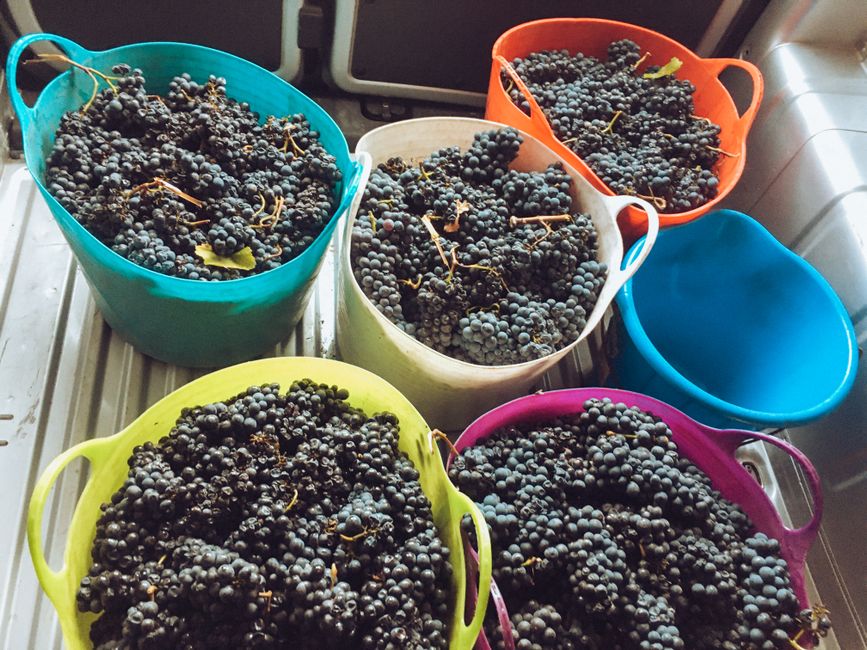
The final harvest decision integrates all these factors, considering the current weather forecast, vineyard health, and desired wine style. A looming rain event or a significant temperature drop can accelerate or halt ripening, necessitating a quick decision. For Pinot Noir, precision picking, often by hand, allows for selective harvesting of optimal clusters and avoids including any diseased or unripe berries, which can compromise the entire lot.
| Indicator | Optimal Range (Pinot Noir) | Significance for Wine Quality |
|---|---|---|
| Brix (°Bx) | 22.0 - 24.0 | Sugar accumulation, potential alcohol content. |
| Titratable Acidity (TA) | 6.0 - 8.0 g/L | Freshness, balance, microbial stability. |
| pH | 3.30 - 3.60 | Color stability, microbial stability, acid perception. |
| Seed Lignification | Brown, crunchy, easily separated from pulp | Indicates maturation of seed tannins, contributes to smooth mouthfeel. |
| Skin Tannin | Supple, non-astringent, releases color easily | Contributes to structure, color, and mouthfeel of red wine. |
| Pulp Flavor | Varietally expressive, no green notes | Overall flavor development, absence of unripe characteristics. |
Common Mistakes:
- Solely Relying on Brix: Harvesting based only on sugar can lead to wines with unbalanced acidity or unripe phenolics.
- Inconsistent Sampling: Non-representative samples can provide misleading data, leading to suboptimal harvest decisions.
- Ignoring Weather Forecasts: A sudden change in weather (e.g. heavy rain, heat spike) can drastically alter ripeness progression or increase disease risk, demanding flexibility in planning.
- Delaying Harvest Too Long: Risk of increased disease pressure (Botrytis), fruit desiccation, loss of acidity, and overripe flavors.
Regional Focus: Pinot Noir Challenges and Adaptations in the Willamette Valley
The Willamette Valley in Oregon is renowned globally for its exceptional Pinot Noir, yet its cool, maritime climate presents specific challenges that demand tailored viticultural practices. Understanding and adapting to these regional nuances is crucial for success.
One of the most significant challenges is the persistent threat of spring frost, particularly at bud break. Pinot Noir's early bud break, often in late March to early April, coincides with the potential for cold air masses to descend from the Cascades. Temperatures dipping below -2°C (28°F) for even a few hours can devastate primary buds. Vineyard site selection is paramount here, prioritizing slopes with good air drainage. Active frost protection methods, such as overhead sprinklers (applying water at 3-4 mm/hour to create an insulating ice layer) or wind machines (mixing warmer inversion air with colder ground air), are essential investments for vulnerable sites. Monitoring localized microclimates with a network of temperature sensors is critical for timely activation of these systems.
The Willamette Valley's extended cool growing season, characterized by average Growing Degree Days (GDD base 10°C) typically ranging from 1000-1300, allows for a prolonged ripening period, which is beneficial for developing complex flavors and maintaining acidity. However, this also means harvest often extends into late September or October, a period when rainfall and humidity increase. This late-season moisture, combined with Pinot Noir's thin skin and tight clusters, creates an elevated risk for Botrytis and other fungal diseases. Vineyard managers must intensify disease monitoring and protection efforts during this time, often requiring pre-harvest fungicide applications with appropriate pre-harvest intervals (PHI).
Managing canopy vigor in the Willamette Valley's fertile soils and ample rainfall requires careful attention. Overly vigorous canopies can quickly become dense and shaded, exacerbating disease pressure. Selecting appropriate rootstocks (e.g. 3309 C, 101-14 Mgt) that moderate vigor for specific site conditions, coupled with rigorous shoot thinning and VSP management, is vital. Precision viticulture using tools like NDVI mapping can help identify zones of varying vigor, allowing for differential management practices within blocks.
Clone selection is another key adaptation. While many Dijon clones (e.g. 115, 777, 667) thrive, understanding their individual ripening curves and disease susceptibilities is important. For instance, Dijon 115 is known for its relatively early ripening, which can be advantageous in years with early autumn rains, while others may require a longer hang time. Diversifying clonal selections within a vineyard can hedge against vintage variation.
In essence, successful Pinot Noir viticulture in the Willamette Valley necessitates a proactive, site-specific approach. It combines advanced technology for monitoring and protection with traditional, hands-on canopy management, all informed by a deep understanding of the region's unique climate and the grape's inherent vulnerabilities.
Common Mistakes:
- Underestimating Late-Season Disease Pressure: Assuming disease risk decreases after veraison can lead to significant Botrytis outbreaks just before harvest.
- Planting in Known Frost Pockets: Despite warnings, some sites are chosen for convenience without adequate frost mitigation planning. If a site is prone to frost, ensure robust protection systems are in place or select alternative varieties.
- Ignoring Soil Variability: Uniform management across diverse soil types within a block can lead to uneven vigor and ripening, compromising overall quality.
- Overlooking Clone-Specific Traits: Treating all Pinot Noir clones identically can neglect specific needs regarding vigor, ripening, and disease resistance.
Tools & Resources for Pinot Noir Viticulture
Effective management of Pinot Noir vineyards relies on a combination of traditional tools, modern technology, and systematic record-keeping. The right resources can significantly enhance precision, reduce risks, and improve decision-making.
Essential Equipment:
- Weather Stations & Sensors: Localized weather stations (e.g. HOBO, Spectrum Technologies) provide real-time data on temperature, humidity, rainfall, and leaf wetness. Networked sensors can monitor microclimates across different blocks, crucial for frost prediction and disease modeling.
- Sprayers: Air-blast or electrostatic sprayers are vital for achieving thorough fungicide and insecticide coverage, especially within dense canopies and tight clusters. Regular calibration and maintenance are essential.
- Refractometers: Handheld or digital refractometers provide quick, on-site measurements of Brix (sugar content) for tracking ripeness.
- Titration Kits: Used for precise laboratory analysis of Titratable Acidity (TA) and pH, critical for assessing acid balance during ripening.
- Pruning Shears & Loppers: High-quality tools are necessary for efficient and clean pruning, shoot thinning, and canopy maintenance.
- Wire Clips & Tying Machines: For secure and efficient VSP wire management and shoot positioning.
- Frost Protection Equipment: Wind machines, overhead sprinklers, or passive methods like row covers are critical for mitigating spring frost damage in vulnerable areas.
- NDVI/Sensor Drones: Drones equipped with multispectral cameras can provide Normalized Difference Vegetation Index (NDVI) maps, highlighting vigor variations within the vineyard to guide variable-rate applications and management zones.
Software & Data Management:
- Vinobloc: This vineyard management software offers comprehensive solutions for tracking vineyard operations, from planting data and block-specific attributes to spray records, labor costs, and harvest yields. Its integrated modules can assist with disease risk modeling, task scheduling, and data analysis, providing managers with actionable insights for informed decision-making. Vinobloc's robust reporting features allow for detailed historical analysis and planning for future vintages.
Helpful Templates & Checklists:
- Canopy Management Schedule: A detailed calendar outlining timing for shoot thinning, VSP wiring, basal leaf removal, and hedging for each block.
- Disease Monitoring Log: A record sheet to track scouting observations, disease incidence, weather conditions, and fungicide applications.
- Pre-Harvest Ripeness Tracking Sheet: A template to record Brix, TA, pH, and sensory notes from weekly berry samples, facilitating ripeness progression analysis.
- Frost Protection Plan Checklist: A step-by-step guide for monitoring temperatures, preparing equipment, and executing frost protection protocols.
- Sprayer Calibration Log: To ensure accurate and consistent application rates and coverage.
Key Takeaways for Growing Pinot Noir
- Proactive Canopy Management is Non-Negotiable: Early and consistent shoot thinning, VSP wiring, and judicious basal leaf removal are critical for air circulation, light penetration, and disease prevention. Late canopy work punishes Pinot Noir by increasing disease risk and compromising fruit quality.
- Botrytis Demands Vigilance: Pinot Noir's thin skin and tight clusters make it highly susceptible to bunch rot. Implement an IPM strategy combining cultural practices, environmental monitoring (using disease models), and timely, rotated fungicide applications with thorough coverage.
- Precision in Harvest Timing is Paramount: Do not rely solely on Brix. Integrate analytical data (Brix, TA, pH) with sensory evaluation (skin, seed, pulp ripeness) to achieve optimal phenolic maturity and acid balance.
- Mitigate Frost Risk at Bud Break: Pinot Noir's early bud break necessitates proactive frost protection strategies, especially in cool climates. Site selection and active protection systems are vital investments.
- Adapt to Regional Specifics: Understand how your local climate (e.g. Willamette Valley's extended cool season, late-season rainfall) exacerbates Pinot Noir's vulnerabilities and adapt management strategies accordingly.
- Utilize Data and Technology: Leverage weather stations, vineyard management software like Vinobloc, and precision viticulture tools to inform decisions, track operations, and optimize resource allocation.
- Consistency is Key: Small, consistent interventions throughout the growing season yield better results than reactive, large-scale corrections.
VinoBloc Team
Vineyard Management Experts
Ready to Transform Your Vineyard Management?
See how VinoBloc can help you streamline block-level data and harvest decisions.
