
Refractometers: Precision Brix Measurement for Vineyard Harvest Management
Optimizing Harvest: Addressing the Ripeness Challenge
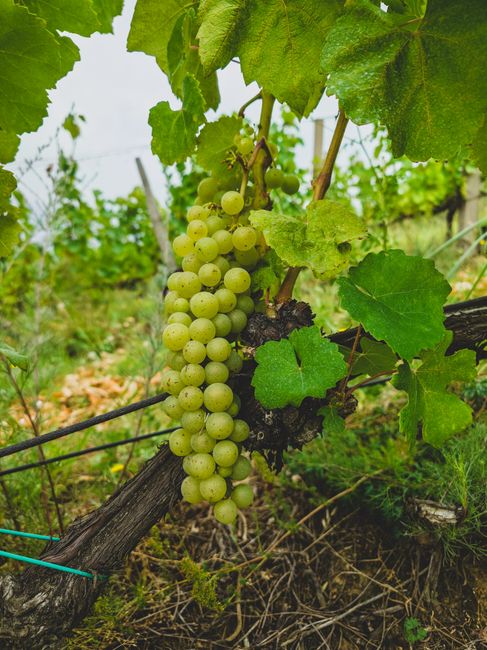
Vineyard managers face a perennial challenge: precisely determining grape ripeness to optimize harvest timing. Misjudging this critical window, even by a few days, can lead to significant consequences. Harvesting too early results in underripe fruit, lacking desired sugar levels and flavor complexity, potentially requiring chaptalization or leading to thin, unbalanced wines. Conversely, harvesting too late can lead to overripe fruit, excessive sugar, loss of acidity, and increased risk of spoilage or undesirable jammy flavors. Both scenarios can reduce grape value, increase winemaking costs, and ultimately impact the marketability and quality perception of the final product. The financial implications, while varying by vintage and varietal, can represent a substantial portion of a block's potential revenue due to downgraded fruit or compromised wine quality.
What is a Refractometer? (The Quick Answer)
A refractometer is an optical instrument used to measure the refractive index of a liquid, which correlates directly to the concentration of dissolved solids. In viticulture, its primary application is to measure the sugar content in grape juice, expressed in degrees Brix (°Brix). Brix is a measure of the total soluble solids, predominantly sugars, and serves as a crucial indicator of grape maturity.
Key Specifications for Vineyard Use
Selecting the right refractometer is essential for accurate field measurements.
| Feature | Specification | Importance for Vineyards |
|---|---|---|
| Measurement Scale | Brix (°Brix) | Directly indicates sugar content, crucial for harvest decisions. |
| Range | Typically 0-32 °Brix | Covers the full range of grape ripeness for most varietals. |
| Accuracy | +/- 0.1 to 0.2 °Brix | Critical for precise ripeness assessment; higher accuracy preferred. |
| Resolution | 0.1 °Brix | Allows for tracking subtle daily changes in sugar levels. |
| Automatic Temperature Compensation (ATC) | Mandatory | Ensures accurate readings regardless of ambient temperature fluctuations in the field. |
| Type | Digital or Optical (Handheld) | Digital offers ease of reading, often higher precision. Optical is durable and battery-free. |
Step-by-Step: Using a Refractometer for Brix Measurement
Accurate measurement relies on consistent technique.
- Calibration: Before each use, or at least daily, calibrate the refractometer. For optical models, apply 2-3 drops of distilled water to the prism, close the cover, and adjust the calibration screw until the boundary line reads 0 °Brix. Digital models typically have an auto-calibration function with distilled water.
- Sample Collection: Collect a representative juice sample. Crush 50-100 berries from various clusters, parts of the canopy (sun-exposed, shaded), and different sections of the block to ensure an average reading. Avoid collecting unripe or damaged berries.
- Apply Sample: Clean the prism/sensor surface with a soft, damp cloth. Apply 2-3 drops of the filtered grape juice onto the prism or sensor plate. Ensure the liquid spreads evenly without air bubbles. For optical models, close the daylight plate gently.
- Take Reading:
- Optical: Hold the refractometer towards a light source and look through the eyepiece. Read the value where the blue and white boundary line intersects the Brix scale. Allow a few seconds for temperature equilibration if not using ATC.
- Digital: Press the 'Read' or 'Measure' button. The Brix value will be displayed on the screen within seconds.
- Record Data: Immediately record the Brix reading, block identification, date, time, and any relevant observations (e.g. specific row, canopy position).
- Clean Thoroughly: After each reading, clean the prism/sensor plate immediately with distilled water and a soft, lint-free cloth. Residual sugars can dry and impair subsequent readings.
Troubleshooting & Safety Considerations
- Unclear Readings: Ensure enough light for optical models. Check for air bubbles or insufficient sample. Clean the prism thoroughly.
- Inconsistent Readings: Recalibrate. Ensure consistent sample collection methodology across the block. Verify ATC is functioning if applicable.
- Safety: Refractometers are delicate instruments. Avoid dropping them. Keep them clean and dry. Store in their protective case.
Practical Applications and Common Mistakes
"Consistent, accurate Brix measurement is the bedrock of informed harvest decisions, directly influencing wine style and quality."
Refractometers are indispensable tools throughout the ripening period.
Example Scenario 1: Pre-Harvest Ripeness Monitoring
A vineyard manager is tracking a Cabernet Franc block aiming for a target Brix of 23-24. Starting at veraison, weekly Brix readings are taken across representative sections. As harvest approaches, readings increase to 21 Brix. The manager then increases sampling frequency to every 2-3 days. When readings consistently hit 23.5 Brix across the block, the harvest crew is scheduled for the next 48-72 hours, ensuring optimal sugar levels for the desired wine style.
Example Scenario 2: Identifying Block Variability
During a sampling round in a Pinot Noir block, the vineyard manager notices that fruit from the top of a south-facing slope consistently measures 2 °Brix higher (e.g. 22.5 °Brix) than fruit from the shaded, lower sections (e.g. 20.5 °Brix). This insight allows for a strategic decision: either harvest the higher-Brix section separately for a distinct wine lot or implement targeted canopy management in the lower sections next season to promote more even ripening.
Common Mistakes and Consequences
- Insufficient Sample Size: Relying on too few berries for a reading leads to unrepresentative data, potentially causing premature or delayed harvesting for an entire block.
- Improper Cleaning: Dried sugar residue on the prism or sensor will skew subsequent readings, consistently showing higher Brix than actual.
- Ignoring ATC: Without ATC, temperature fluctuations can significantly impact readings (e.g. a 10°C temperature difference can alter readings by approximately 0.5 °Brix), leading to inaccurate ripeness assessment.
- Infrequent Calibration: An uncalibrated refractometer will provide systematically erroneous readings, undermining all data collection.
Integrating Data with Vineyard Management Systems
For advanced vineyard management, integrating refractometer data into a centralized system is crucial. Recording Brix values manually and then transcribing them can introduce errors and delay analysis. Utilizing a platform like VinoBloc allows vineyard managers to log Brix readings directly in the field, associate them with specific blocks or sampling points, and visualize ripening trends over time. This digital approach supports more informed decision-making, facilitates historical data analysis, and streamlines communication with winemaking teams.
Actionable Next Steps
To leverage refractometer technology effectively, consider these immediate actions:
- Procure & Calibrate: Acquire a high-quality digital refractometer with ATC. Immediately calibrate it using distilled water to establish baseline accuracy.
- Develop SOP for Sampling:
- Develop SOP for Sampling: Create a standard operating procedure for field sampling, specifying the number of berries per sample, frequency, and block coverage to ensure representative data.
- Staff Training: Conduct hands-on training for all staff involved in sampling on proper refractometer use, cleaning, and data recording techniques.
- Integrate Data Logging: Implement a system for digital data capture. Explore using VinoBloc to log Brix readings directly, enabling trend analysis and historical comparisons.
- Set Ripeness Targets: Collaborate with winemaking to establish clear Brix targets (e.g. 23-25 °Brix for Chardonnay intended for barrel fermentation) for each varietal and block, guiding harvest decisions.
Implementation Timeline & Success Metrics
- Timeline: Within the next 2-4 weeks (pre-veraison), secure equipment and complete staff training. Begin integrating data logging tools during veraison.
- Success Metrics: Reduced variability in harvested Brix across blocks; fewer instances of fruit being rejected or downgraded due to under/over-ripeness; improved consistency in wine quality attributed to optimal sugar levels at harvest; streamlined data flow from field to cellar.
VinoBloc Team
Vineyard Management Experts
Ready to Transform Your Vineyard Management?
See how VinoBloc can help you streamline block-level data and harvest decisions.