
Boosting Vineyard Soil Health: A Manager's Guide to Organic Matter
Important Disclaimer
- The estimated percentages for increased irrigation demand and fertilizer requirements are general guidelines; actual impacts can vary significantly based on specific vineyard conditions, soil type, climate, and existing organic matter levels.
The Hidden Cost of Low Organic Matter in Vineyards
Vineyard managers often contend with fluctuating vine vigor, inconsistent yields, and increasing input costs for water and fertilizer. These challenges frequently trace back to a fundamental issue: insufficient organic matter (OM) in the soil. When soil OM dips below optimal levels, you face a cascade of problems: reduced water holding capacity, increased nutrient leaching, poor soil structure leading to compaction, and diminished microbial activity. The cumulative effect is a less resilient vineyard ecosystem, demanding more resources to maintain productivity and quality. This translates directly to higher operational expenses—more irrigation, more fertilizer applications, and potentially reduced grape quality or yield stability, impacting your bottom line significantly.
Key Insight: Low soil organic matter can increase irrigation demand by an estimated 10-20% and fertilizer requirements by 15-30% in typical vineyard settings, alongside contributing to soil compaction issues.
Establishing Optimal Organic Matter Targets
For most vineyard soils, the target range for organic matter is 3% to 5%. Soils consistently below 2% are considered deficient and will exhibit significant limitations. Regular soil testing is crucial for establishing a baseline and tracking progress.
Recommended Soil Testing Specifications
| Parameter | Frequency | Target Range | Notes |
|---|---|---|---|
| Organic Matter (OM) | Annually (or biennially) | 3.0% - 5.0% | Use loss-on-ignition or combustion method. |
| pH | Annually | 5.5 - 7.0 | Influences nutrient availability and microbial activity. |
| C:N Ratio (for amendments) | Per batch of compost/mulch | 25:1 - 35:1 | Critical for decomposition and nutrient cycling. |
Step-by-Step Process: Building and Maintaining Organic Matter
-
Baseline Assessment and Goal Setting: Conduct comprehensive soil tests across different blocks or management zones. Use results to establish a baseline OM percentage and set realistic annual targets for improvement (e.g. increasing OM by 0.2-0.5% per year). Document all findings using a vineyard management platform like VinoBloc to track historical data and correlate with vine performance.
-
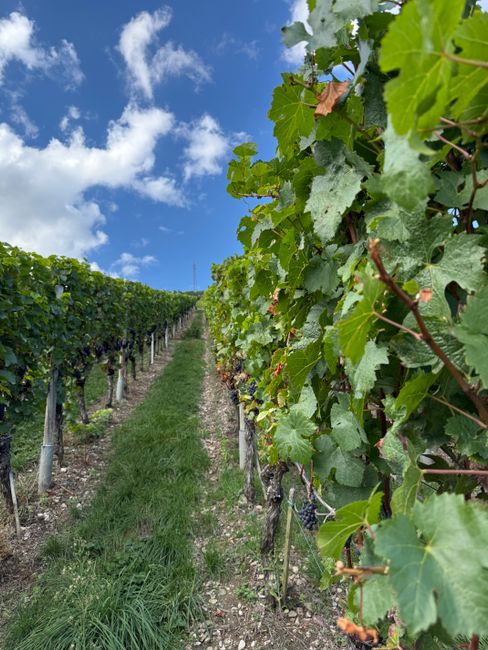
Strategic Cover Cropping: Implement a cover cropping program tailored to your climate and soil type. Choose species that contribute significant biomass and nitrogen if needed. Ideal timing for seeding is typically post-harvest (fall) or early spring. Termination should occur before competition with vines becomes an issue, often pre-budbreak or early shoot growth. Avoid clean tilling, which rapidly oxidizes OM.
- Winter Annuals: Cereal rye (e.g. 'Aroostook' or 'Wrens Abruzzi'), oats, barley. Seeding rate: 40-60 lbs/acre.
- Legumes: Crimson clover, vetch (e.g. 'Hairy Vetch'). Seeding rate: 15-30 lbs/acre. Good for N fixation.
- Mixes: A combination of grasses and legumes (e.g. 30 lbs rye + 15 lbs vetch per acre) provides both biomass and nitrogen.
-
Compost and Organic Amendment Application: Apply high-quality compost or other organic amendments (e.g. grape pomace, wood chips) annually or biennially. Aim for a compost with a C:N ratio between 25:1 and 35:1 to ensure efficient decomposition without tying up soil nitrogen. Apply 3-5 tons per acre of finished compost, ideally in late fall or early spring. Spread evenly using a tractor-mounted spreader. Avoid applying raw, undecomposed materials directly, as they can temporarily deplete soil nitrogen.
Safety Note: When handling and spreading bulk organic amendments, always wear appropriate personal protective equipment (PPE), including gloves, dust mask, and eye protection. Ensure equipment is in good working order and operate according to manufacturer guidelines.
-
Minimize Soil Disturbance: Reduce or eliminate aggressive tillage. Tillage aerates the soil, accelerating OM decomposition and releasing carbon. Prioritize no-till or minimal-till practices to preserve soil structure and allow OM to accumulate. If tillage is necessary for new plantings or specific issues, consider strip-tillage or shallow cultivation.
-
Monitor and Adapt: Re-test soil OM levels annually. Track changes and correlate them with vine health, water usage, and nutrient requirements. Adjust your cover crop choices, seeding rates, and amendment application rates based on the observed trends. Use VinoBloc to log all applications and soil test results for long-term analysis.
Troubleshooting Common Issues
- OM Not Increasing: Re-evaluate cover crop biomass production and termination methods. Ensure compost C:N ratio is appropriate. Reduce tillage frequency. Consider higher application rates of amendments.
- Nutrient Imbalances Post-Application: If nitrogen appears deficient after amendment application, the C:N ratio of your material may be too high. Supplement with a balanced organic nitrogen source or adjust compost sourcing.
Example Scenario (Hypothetical)
A vineyard block with historically low OM (1.8%) and high irrigation demand initiates a program combining winter cereal rye (40 lbs/acre) terminated by rolling/crimping in spring, followed by an annual application of 4 tons/acre of finished compost (C:N 28:1) post-harvest. After three years, soil tests show an OM increase to an estimated 2.7-3.0%, with observable reductions in irrigation frequency by approximately 10% and improved vine vigor consistency.
Actionable Next Steps for Vineyard Managers
- Schedule Soil Testing: If not already done, schedule comprehensive soil tests for all vineyard blocks within the next 4-6 weeks to establish current OM levels and other key parameters.
- Research Cover Crop Options: Identify 2-3 suitable cover crop species or mixes for your region and specific vineyard conditions. Plan for fall seeding post-harvest.
- Source Organic Amendments: Investigate local sources for high-quality, finished compost or other suitable organic materials. Request C:N ratio analysis for bulk purchases.
- Review Tillage Practices: Evaluate current tillage practices and identify areas where reductions or shifts to minimal disturbance can be implemented immediately.
Implementation Timeline: Initiate soil testing and cover crop research within the next month. Plan for cover crop seeding in late fall, and compost application either late fall or early spring, depending on availability and vineyard schedule.
Success Metrics: Annual soil tests showing a consistent increase in organic matter (aim for 0.2-0.5% per year), reduced irrigation frequency, decreased reliance on synthetic fertilizers, and improved vine health and resilience documented through observation and yield data.
VinoBloc Team
Vineyard Management Experts
Ready to Transform Your Vineyard Management?
See how VinoBloc can help you streamline block-level data and harvest decisions.