
Precision Cluster Counting: Advanced Strategies for Accurate Vineyard Yield Estimation
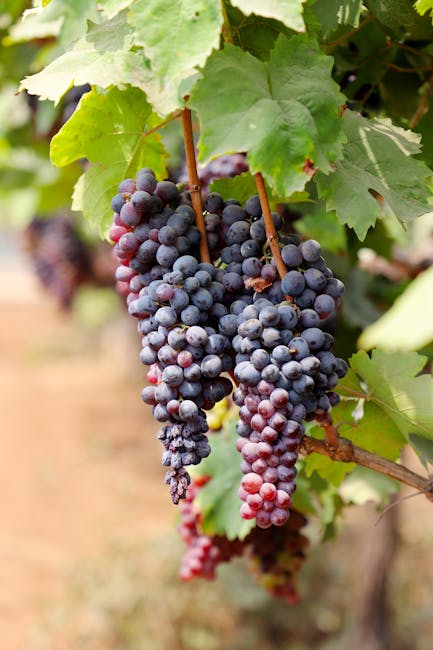
The Critical Challenge of Inaccurate Yield Estimation
For experienced vineyard managers, the annual cycle of yield estimation is fraught with significant challenges. An inaccurate yield projection can have cascading financial and operational repercussions, impacting everything from contract negotiations with wineries to labor allocation, processing plant capacity planning, and even the final wine quality. Overestimating yield can lead to insufficient tank space, rushed harvests, and potentially compromised wine quality due to overcropping, while underestimation can result in missed market opportunities, unfulfilled contracts, and inefficient resource utilization. The cost of these inaccuracies, though not always immediately quantifiable in specific dollar figures, manifests in reduced profitability, increased operational stress, and diminished reputation. Mastering cluster counting is a foundational step in mitigating these risks and establishing a more predictable, profitable harvest.
Establishing a Robust Cluster Counting Protocol
Accurate cluster counting requires a systematic approach, combining precise sampling with diligent data recording. The goal is to extrapolate a reliable vineyard-wide estimate from a representative sample, accounting for block-specific variability.
Key Specifications and Equipment
- Timing: Cluster counting is most effective between 4-6 weeks post-fruit set, typically during early veraison (Brix 6-8). At this stage, cluster number is generally stable, and clusters are large enough for accurate identification.
- Sampling Intensity: A minimum of 5-10% of vines per block is recommended for robust statistical representation. For blocks exhibiting high variability, increasing the sample size to 15-20% may be necessary.
- Sample Plot Size: Establish representative sample plots, often defined by a specific number of vines (e.g. 10-20 consecutive vines) or a measured row length (e.g. 1/10th of an acre). For a typical 8x5 ft vine spacing, a 1/10th acre plot would contain approximately 108 vines (43,560 sq ft / (8 ft * 5 ft) / 10).
- Equipment:
- Measuring tape (50-100 ft) for establishing plot boundaries.
- Flagging tape or brightly colored stakes for marking sample vines/rows.
- Clipboards or ruggedized tablets for data entry.
- Permanent markers for vine numbering.
- Handheld GPS device or smartphone with GPS capabilities for plot location mapping.
- For later stages of yield estimation, a digital scale (accurate to ±1g) for cluster weight sampling and a refractometer (e.g. Atago PAL-1, range 0-53% Brix) for maturity assessment.
Step-by-Step Cluster Counting Process
- Define Management Zones and Blocks:
Before any field work, segment the vineyard into homogeneous management zones or blocks based on cultivar, rootstock, soil type, irrigation practices, and historical yield data. Utilize historical yield maps or vigor maps (e.g. NDVI from satellite imagery) to identify areas of differing productivity within a block, ensuring these areas are adequately represented in your sampling strategy.
- Establish Permanent Sample Plots:
Within each defined block, randomly select and permanently mark sample rows or individual vines. For consistency year-over-year, it is beneficial to use the same sample locations. Mark these vines with durable tags or painted numbers. Ensure plots are representative of the block's overall vigor and canopy density, avoiding end-of-row vines or areas adjacent to headlands unless specifically studying edge effects.
- Conduct Initial Cluster Count (Early Veraison):
Dispatch trained personnel to each marked sample vine. Count every cluster present on the vine. It is crucial to be thorough, checking beneath canopies and within dense foliage. Record the total cluster count for each individual vine or for the entire sample plot.
Industry experts note that consistency in counting methodology across all team members is paramount. Conduct a calibration session prior to field deployment to ensure everyone understands what constitutes a "cluster" (e.g. distinguishing between a full cluster and a small, secondary cluster if specific protocols dictate).
- Data Recording and Integration:
Record data meticulously. For digital capture, a tablet loaded with a vineyard management application such as VinoBloc can streamline data entry, link counts to specific GPS coordinates, and facilitate immediate analysis. If using paper forms, ensure clear labeling and double-check entries before leaving the field.
Sample Cluster Count Data Sheet Structure
Block ID Row # Vine # Cluster Count Notes (e.g. missing vine, disease) Cab Sauv Block 3 15 07 22 Cab Sauv Block 3 15 08 19 Merlot Block 1 05 12 16 Slight powdery mildew - Calculate Average Cluster Count Per Vine:
Sum the total clusters counted within a sample plot or block, then divide by the number of vines sampled in that area to get an average cluster count per vine. Multiply this average by the total number of bearing vines in the block to obtain a preliminary block-level cluster estimate.
- Future Steps: Cluster Weight and Final Yield:
This cluster count provides a critical baseline. Closer to harvest (e.g. 1-2 weeks prior), revisit the same sample vines to collect actual cluster weights. Harvest a representative sample of clusters (e.g. 50-100 clusters) from the marked vines, weigh them, and calculate an average cluster weight. The final yield estimate is then derived by multiplying the total estimated clusters by the average cluster weight.
Troubleshooting and Common Mistakes
- High Variability in Counts: If initial cluster counts show extreme variability within a designated block, it may indicate that the block is not as homogeneous as initially assumed. Consider subdividing the block into smaller, more uniform management zones and re-establishing sample plots. Increase the sampling intensity in highly variable areas.
- Inconsistent Counting by Team Members: This is a common issue. Conduct thorough training and calibration sessions before field deployment. Have team members count the same set of vines and compare results. Address discrepancies immediately to standardize the approach.
- Forgetting to Account for Missing/Dead Vines: Ensure that the total vine count used for extrapolation accurately reflects the number of *bearing* vines. Exclude dead or non-producing vines from calculations to prevent overestimation.
- Neglecting to Recalibrate Cluster Weight: Cluster weight can fluctuate significantly due to weather, irrigation, and pest pressure. Relying on historical cluster weights without current season validation is a common error leading to inaccurate final yield estimates.
Safety Considerations
Vineyard work involves inherent risks. Ensure all personnel are trained in basic field safety: hydration, sun protection (hats, sunscreen), awareness of uneven terrain, and proper handling of any tools. When working near machinery, maintain clear communication and visibility.
Example Scenarios (Hypothetical)
Example Scenario 1: Estimating Cluster Count for a Chardonnay Block
A vineyard manager needs to estimate the cluster count for a 5-acre Chardonnay block with 8x5 ft vine spacing (approx. 1089 vines/acre). A 10% sample is chosen, targeting 500 vines across the block. Twenty permanent sample plots, each consisting of 25 consecutive vines, are established throughout the block, strategically placed to represent different vigor levels identified via NDVI mapping. During early veraison, a team counts clusters on these 500 vines. The total count for the 500 vines is 9,500 clusters. This yields an average of 19 clusters per vine (9,500 clusters / 500 vines). For the entire 5-acre block (5,445 vines), the estimated total cluster count is 103,455 clusters (19 clusters/vine * 5,445 vines). This figure provides a strong foundation for subsequent cluster weight measurements closer to harvest.
Example Scenario 2: Adjusting for Block Variability in a Pinot Noir Block
A 3-acre Pinot Noir block historically shows high variability in vigor. The manager samples 300 vines (approximately 9% of the block's vines), establishing 15 permanent plots of 20 vines each. After initial counting, one section of the block (identified as lower vigor from historical data) consistently shows 12-15 clusters/vine, while another section (higher vigor) shows 18-22 clusters/vine. Instead of a single average, the manager calculates separate averages for these two sub-zones. The lower vigor sub-zone (1.5 acres, 1634 vines) averages 13.5 clusters/vine, and the higher vigor sub-zone (1.5 acres, 1634 vines) averages 20 clusters/vine. This refined approach yields a more accurate total cluster estimate for the block, accounting for within-block differences, rather than relying on a potentially misleading single average.
Actionable Next Steps for Vineyard Managers
Implementing or refining your cluster counting protocol requires deliberate planning and execution. The following immediate actions can significantly enhance the accuracy and utility of your yield estimation efforts:
- Designate and Train Your Sampling Team: Identify key personnel responsible for data collection. Conduct a comprehensive training session covering the precise methodology, safety protocols, and the importance of consistent counting. This should occur 2-3 weeks before the target counting window (early veraison).
- Acquire and Prepare Necessary Equipment: Ensure all tools—measuring tapes, flagging, data recording devices (tablets or clipboards), and GPS units—are available and in good working order. Pre-load any digital forms or applications like VinoBloc onto tablets for efficient data capture. This should be completed at least 1 week prior to counting.
- Establish or Review Permanent Sample Plots: Walk through your vineyard blocks and either establish new permanent sample plots or verify the locations of existing ones. Ensure they are clearly marked and representative of the block's variability. This task is best completed during dormancy or early shoot growth to allow ample time before the counting period.
- Integrate Data with Vineyard Management Software: Plan how the collected cluster count data will be integrated into your existing vineyard management system. Utilizing platforms like VinoBloc allows for immediate data visualization, historical comparison, and more robust statistical analysis, moving beyond simple spreadsheet calculations.
Implementation Timeline and Success Metrics
- Timeline:
- Pre-Veraison (4-6 weeks post-fruit set): Complete team training, equipment checks, and plot establishment. Conduct initial cluster counting.
- Post-Counting: Input data, perform initial analysis, and generate preliminary cluster estimates.
- Closer to Harvest (1-2 weeks prior): Conduct cluster weight sampling from the same plots to finalize yield estimates.
- Success Metrics:
- Improved Accuracy: Aim for a reduction in the variance between estimated and actual harvest yield to within ±5-10% consistently across blocks.
- Enhanced Planning: Demonstrate improved efficiency in labor scheduling, tank space allocation, and pre-harvest logistics.
- Data-Driven Decisions: Increased utilization of yield estimation data in financial projections and contract negotiations.
By meticulously implementing these advanced cluster counting strategies, vineyard managers can significantly enhance the precision of their yield estimates, leading to more informed decision-making and ultimately, greater operational efficiency and profitability.
VinoBloc Team
Vineyard Management Experts
Ready to Transform Your Vineyard Management?
See how VinoBloc can help you streamline block-level data and harvest decisions.