Harvest Order: Mastering Block Prioritization for Optimal Wine Quality
The Critical Harvest Order Dilemma
For experienced vineyard managers, the moment of truth arrives when multiple blocks are nearing ripeness simultaneously. Deciding which block to harvest first is a complex, high-stakes decision that directly impacts wine quality, operational efficiency, and ultimately, profitability. A misstep can lead to overripe fruit, stuck fermentations, compromised varietal character, and the financial burden of re-processing or reduced grape value. This problem isn't just about timing; it's about strategic prioritization that balances viticultural science with logistical realities.
Vineyard managers report that suboptimal harvest timing can reduce grape value by an estimated 10-20% in challenging vintages due to quality downgrades or increased processing costs.
Key Ripeness Parameters and Thresholds
Making informed harvest decisions requires precise data. While target parameters vary by varietal, clone, and desired wine style, general ranges provide a starting point:
| Parameter | White Varietals (e.g. Chardonnay, Sauvignon Blanc) | Red Varietals (e.g. Cabernet Sauvignon, Pinot Noir) |
|---|---|---|
| Brix (ºBx) | 21-24 | 23-26 |
| pH | 3.1-3.4 | 3.4-3.7 |
| Titratable Acidity (TA, g/L) | 7-9 | 5-7 |
| Optimal Harvest Window Duration (Variable) | Highly variable, depends on varietal, climate, and desired style. | Highly variable, depends on varietal, climate, and desired style. |
Step-by-Step Harvest Prioritization Process
-
Establish Block-Specific Ripeness Targets
Before veraison, define precise Brix, pH, TA, and phenolic ripeness goals for each block, considering varietal, clone, rootstock, and desired wine style. These are your benchmarks.
-
Implement Intensive Sampling Protocols
Beginning 2-3 weeks pre-harvest, initiate daily or bi-daily sampling for critical blocks. Collect representative berry samples from multiple clusters across the block. Immediately measure Brix with a calibrated refractometer, pH with a reliable pH meter (e.g. Hanna Instruments HI98190), and TA via titration. Record all data meticulously in a vineyard management system like VinoBloc to track trends.
-
Conduct Sensory Phenolic Assessment
For red varietals, Brix, pH, and TA are insufficient. Perform daily sensory evaluations of berries from each block: assess skin tannin development (softening, lack of astringency), pulp color and texture, and seed lignification (browning, crunchiness). Green, bitter seeds indicate unripe phenolics, regardless of sugar levels.
-
Integrate Weather Forecasts
Monitor 5-7 day forecasts constantly. Impending rain can dilute sugars and flavors, increase disease pressure, and make harvesting difficult. Extreme heat can accelerate sugar accumulation while phenolics lag, or lead to desiccation. Frost threats necessitate immediate action for susceptible blocks.
-
Evaluate Logistical Constraints
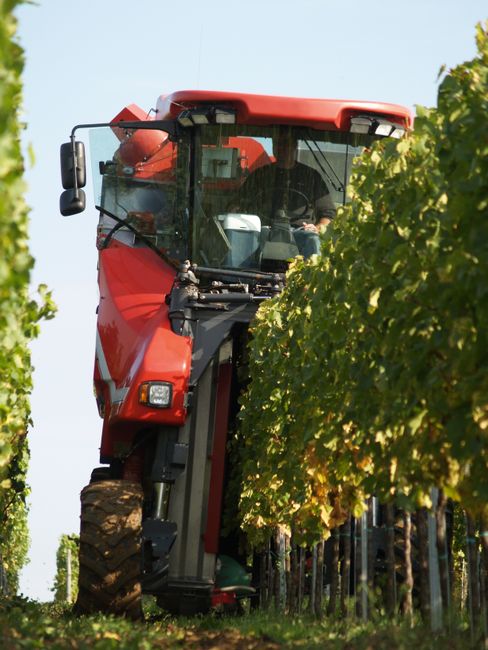
Assess labor availability (hand-picking crews, machine operators), harvester readiness, press capacity, and tank space at the winery. Prioritize blocks that require specific equipment or immediate processing due to limited capacity.
-
Apply a Prioritization Matrix
Combine all data points. Blocks exhibiting rapid sugar accumulation with ideal pH/TA and phenolic ripeness (especially reds) are high priority. Blocks threatened by imminent adverse weather (e.g. heavy rain within 24-48 hours) move to the top of the list, even if slightly below optimal parameters. Blocks with rapidly dropping acidity or rising pH also demand immediate attention to preserve freshness.
Example scenario: A Cabernet Sauvignon block is at 25 Brix, pH 3.6, TA 6.5 g/L. Seeds are mostly brown, but a few are still slightly green. A major heatwave (38°C+) is forecast for the next 3 days. Decision: Prioritize harvesting this block within 24-36 hours. The risk of over-ripeness, raisin formation, and further pH rise from the heatwave outweighs the slight phenolic immaturity.
-
Communicate and Execute
Finalize the harvest schedule with your team and the winery. Ensure all equipment is checked, and safety protocols are reviewed, especially for night harvesting. Clear communication prevents delays and errors.
Example scenario: A Sauvignon Blanc block is at 22 Brix, pH 3.2, TA 8.5 g/L. It's perfectly balanced. A 50mm rain event is forecast in 48 hours. Decision: Harvest this block immediately. The goal is to capture optimal acidity and aromatic precursors before dilution from rain, despite other blocks potentially being slightly closer to their sugar targets.
Common Mistakes and Consequences
- Over-reliance on Brix: Ignoring pH, TA, or phenolic ripeness can lead to unbalanced wines.
- Ignoring weather: Failing to adjust schedules for rain or extreme heat results in diluted or baked fruit.
- Poor communication: Misaligned expectations between vineyard and winery can cause logistical bottlenecks and quality compromises.
- Lack of data tracking: Without consistent, organized data (e.g. in VinoBloc), trend analysis and informed decisions are impossible.
Actionable Next Steps
To optimize your harvest order decision-making for the upcoming vintage:
- Refine Block-Specific Targets: Within the next 2-4 weeks, review and update the desired ripeness parameters for each block based on historical data and winemaking goals.
- Standardize Sampling Protocols: Establish clear, consistent procedures for daily/bi-daily berry sampling and lab analysis, ensuring all team members follow the same methods.
- Integrate Weather Analytics: Implement a system for daily, detailed weather forecast review, identifying critical triggers (e.g. >25mm rain, >35°C for 3+ days).
- Leverage Vineyard Management Software: Utilize tools like VinoBloc to centralize ripeness data, track trends, and visualize block readiness, enabling more dynamic decision-making.
By implementing these steps, vineyard managers can move beyond reactive harvesting to a proactive, data-driven approach, securing the highest quality fruit possible from every block.
VinoBloc Team
Vineyard Management Experts
Ready to Transform Your Vineyard Management?
See how VinoBloc can help you streamline block-level data and harvest decisions.