
Low Brix: The 5 Fastest Levers (Without Guessing) for Vineyard Managers
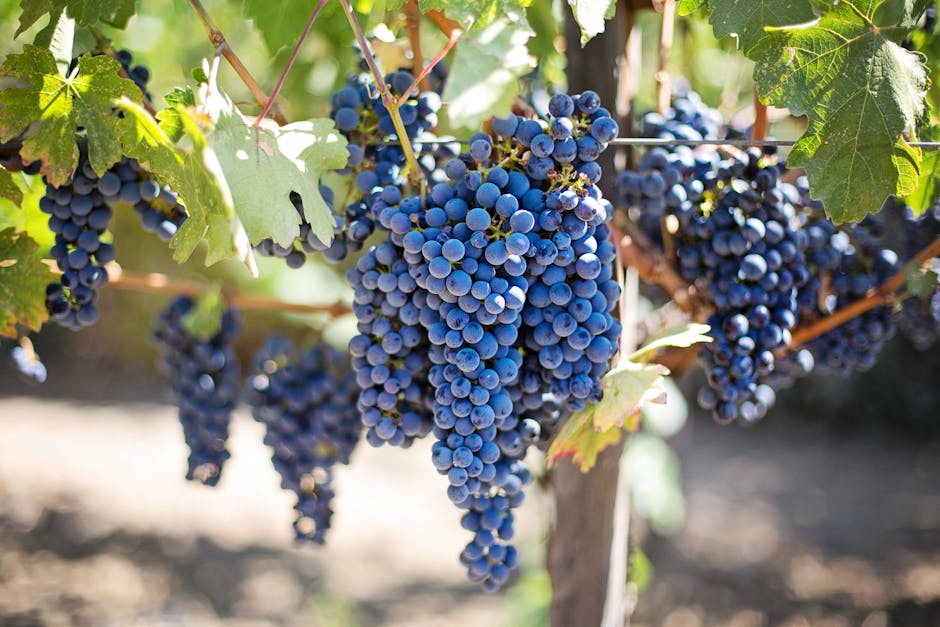
The High Cost of Low Brix: A Critical Challenge for Vineyard Managers
For experienced vineyard managers, the specter of low Brix at harvest is more than just a quality concern; it represents a tangible threat to profitability and brand reputation. When fruit fails to reach target sugar levels (e.g. 24-26 Brix for premium reds or 20-22 Brix for whites), it can lead to costly delays in harvest, increased winery processing expenses, potential rejection of lots, or the production of wines with unbalanced alcohol levels and undesirable flavor profiles. This directly impacts grape contract fulfillment, reduces market value, and can necessitate expensive chaptalization or blending adjustments at the winery. The cumulative effect of these issues can significantly erode your season's margins and undermine long-term relationships with winemakers.
Fortunately, several rapid, data-driven interventions can significantly impact Brix accumulation. These are not speculative adjustments but proven levers that, when applied precisely and at the correct physiological stage, can guide your fruit toward optimal ripeness.
The 5 Fastest Levers for Low Brix Remediation
1. Targeted Canopy Management
Excessive shading is a primary inhibitor of sugar accumulation. Strategic leaf removal improves light penetration and air circulation, directly enhancing fruit maturity.
- Assess Canopy Density: Evaluate your vine rows for a target of 1-2 leaf layers in the fruiting zone. Utilize a point quadrat or similar method to quantify leaf area index (LAI) if available, aiming for an LAI of 2.5-3.5 post-thinning for most Vitis vinifera varieties.
- Execute Basal Leaf Removal: Perform leaf removal in the fruiting zone when berries are at pea-size to early veraison (typically 4-6 weeks post-bloom). Target the removal of 3-5 basal leaves per shoot, focusing on leaves that directly shade clusters. Avoid excessive removal in high-UV environments to prevent sunburn.
- Lateral Shoot Management: Remove or truncate secondary lateral shoots that emerge after primary shoot cessation. These compete for resources and contribute to shading. This is most effective when laterals are young (2-4 leaves).
- Troubleshooting & Common Mistakes:
- Mistake: Removing too many leaves too late. Consequence: Increased sunburn, reduced photosynthetic capacity when it's most needed.
- Guidance: Aim for dappled sunlight on clusters, not direct, intense exposure, especially in warmer climates. Early intervention minimizes stress.
Example scenario (hypothetical): A block of Cabernet Sauvignon consistently struggles to reach 24 Brix. Following a post-bloom assessment revealing an average of 3-4 leaf layers, a crew performs targeted basal leaf removal (4 leaves per shoot) at pea-size berry. Monitoring shows an estimated 0.8-1.2 Brix increase at harvest compared to unthinned control rows, with improved color and phenolic ripeness.
2. Precision Irrigation Adjustment
Controlled water stress, particularly post-veraison, can shift vine resources from vegetative growth to fruit ripening, concentrating sugars.
- Monitor Soil Moisture: Utilize soil moisture probes (e.g. capacitance or neutron probes) placed at 12, 24, and 36 inches depth. Establish a baseline for vineyard water holding capacity. Track daily evapotranspiration (ETc) via weather stations. Vineyard management platforms like VinoBloc can integrate this data for real-time insights.
- Implement Deficit Irrigation: Begin reducing irrigation at or just after veraison. Target soil moisture potentials of -60 to -80 kPa (for loamy soils) or provide 50-70% of estimated ETc. The goal is to induce mild to moderate water stress without causing vine shutdown or excessive leaf senescence.
- Observe Vine Response: Monitor tendril turgor, shoot growth cessation, and leaf water potential (if measured). Adjust irrigation frequency and duration based on vine vigor and weather conditions. Avoid severe stress that can lead to shrivel or compromised fruit quality.
- Safety Considerations: Ensure irrigation lines are free of leaks and emitters are functioning correctly to prevent uneven water distribution.
3. Strategic Crop Load Adjustment
Reducing the number of clusters per vine allows remaining fruit to ripen more efficiently, concentrating sugars and flavors.
- Assess Crop Load: Conduct a pre-veraison cluster count, aiming for a target range of 1-1.5 clusters per shoot, or a specific tonnage per acre based on variety and block history (e.g. 2.5-3.5 tons/acre for premium Pinot Noir).
- Execute Cluster Thinning: Perform thinning at berry softening (late pea-size to early veraison). Remove smaller, less developed clusters, or those in shaded positions. For varieties prone to uneven ripening (e.g. Zinfandel), consider 'green drop' of lagging clusters.
- Maintain Uniformity: Strive for uniform cluster size and spacing on the vine. Remove 'shoulders' from large clusters if necessary to promote even ripening within the cluster.
- Common Mistakes:
- Mistake: Thinning too early or too late. Consequence: Early thinning can lead to compensatory berry enlargement; late thinning has minimal impact on sugar accumulation.
- Guidance: The sweet spot is typically when berries are fully set and beginning to soften, allowing the vine to reallocate resources effectively.
Example scenario (hypothetical): A high-yielding Chardonnay block is consistently 1-2 Brix below target. A pre-veraison assessment shows 2.5 clusters per shoot. A thinning pass reduces this to 1.2 clusters per shoot, removing smaller, less exposed clusters. This intervention is estimated to contribute 0.5-1.0 Brix improvement at harvest, alongside enhanced flavor intensity.
4. Nutrient Optimization (Potassium & Boron)
Specific nutrient deficiencies, particularly potassium and boron, can directly impede sugar translocation and overall ripening.
- Petiole Analysis: Conduct petiole analysis at bloom and veraison. Target optimal ranges: Potassium (K) > 1.5% and Boron (B) > 25 ppm.
- Diagnose Deficiencies: If K is below 1.2% or B is below 20 ppm, consider immediate intervention.
- Targeted Application:
- Potassium: For moderate deficiencies, apply foliar potassium (e.g. potassium thiosulfate at 5-10 lbs/acre or potassium sulfate at 3-5 lbs/acre) during veraison. For severe deficiencies, consider soil application of potassium sulfate (100-200 lbs/acre) in the fall or early spring.
- Boron: For deficiencies, apply foliar boron (e.g. Solubor at 0.5-1 lb/acre) at pre-bloom and again at veraison.
- Timing & Safety: Foliar applications are most effective when leaves are fully turgid. Always follow label rates and wear appropriate Personal Protective Equipment (PPE) during mixing and application.
| Nutrient | Target Petiole Range | Foliar Product | Application Rate (Estimate) | Timing |
|---|---|---|---|---|
| Potassium (K) | > 1.5% | Potassium Thiosulfate | 5-10 lbs/acre | Veraison |
| Boron (B) | > 25 ppm | Solubor (17.5% B) | 0.5-1 lb/acre | Pre-bloom, Veraison |
5. Soil Health & Microbiome Enhancement
A healthy soil ecosystem directly supports nutrient availability and uptake, which are critical for sustained sugar accumulation. This is a longer-term lever but can show rapid benefits in nutrient cycling.
- Soil Testing & pH Correction: Conduct comprehensive soil tests every 2-3 years. Ensure soil pH is within the optimal range of 6.0-6.5 for nutrient availability. Amend with lime (to raise pH) or sulfur (to lower pH) as needed, applied in fall or winter.
- Organic Matter Augmentation: Aim for 2-3% organic matter in the topsoil. Apply high-quality compost (5-10 tons/acre every 2-3 years) or plant cover crops (e.g. legumes, grasses) in alternate rows or throughout the vineyard floor. Organic matter improves soil structure, water retention, and microbial activity.
- Promote Microbial Diversity: Minimize tillage, reduce broad-spectrum pesticide use, and incorporate diverse cover crop mixes. A robust soil microbiome enhances nutrient cycling and root health, indirectly supporting Brix development.
- Consequences of Neglect: Poor soil health leads to nutrient tie-up, reduced water infiltration, and increased vine stress, all of which compromise sugar accumulation.
Actionable Next Steps
Implementing these levers requires precise planning and execution. Here are immediate actions to take:
- Within 1 Week: Review your most recent petiole analysis and soil test results. Identify any critical nutrient deficiencies (K, B) or pH imbalances that require immediate attention. Calibrate all irrigation equipment and deploy/verify soil moisture probes in representative blocks.
- Within 2 Weeks: Schedule vineyard walks with your crew leaders to assess canopy density and crop load across all blocks. Develop a detailed plan for targeted leaf removal and cluster thinning, specifying timing and intensity for each block based on current vine vigor and historical performance.
- Ongoing Monitoring: Establish a routine for weekly Brix sampling (starting at veraison) and visual vine health assessments. Utilize vineyard management software like VinoBloc to log and analyze this data, allowing for timely adjustments.
Success Metrics: Achieving target Brix levels within a narrow range (e.g. +/- 0.5 Brix) across blocks, improved fruit uniformity (reduced sorting), and consistent flavor development.
VinoBloc Team
Vineyard Management Experts
Ready to Transform Your Vineyard Management?
See how VinoBloc can help you streamline block-level data and harvest decisions.